
Updated July 2026 · 8 min read
Quick Overview
Your 5-year-old is glued to a screen. Every parent knows that feeling — and most worry about it. But what if that screen time could actually build something real? Coding for 5-year-olds isn’t a gimmick or a stretch. It’s one of the most well-researched investments a parent can make in their child’s early development.
Without the right foundation, kids consume technology their entire childhood — but never understand it. By the time they’re teenagers, the confidence gap between those who create and those who only scroll becomes very real. This guide breaks down exactly what’s possible at age 5, what tools work, what doesn’t, and how to give your child a genuine head start. Keep reading — the answer will surprise you.
Table of Contents
Yes — and researchers have the data to prove it. A 2025 study in the Journal of Technology Education found that children aged 3–5 can successfully engage with structured coding and robotics activities when the tools match their developmental stage. The key phrase there is tools that match their stage. A 5-year-old doesn’t write Python. They snap colourful blocks together and watch something move.
According to MIT research, ages 5–7 sit in the prime language-learning window — when children absorb pattern-based systems most effectively. Coding is, at its core, a pattern-based language. That’s why early coding sticks so well. It’s not about the syntax. It’s about the logic.
At ItsMyBot, we’ve seen 5-year-olds build their first animation in a live junior coding class within their first session. Not because they’re prodigies — because the right curriculum meets them exactly where they are.
Parents often imagine coding as typing complex commands on a black screen. At age 5, it looks nothing like that. Here’s what a structured junior coding class actually teaches:
Sequences
Teaching a character to move step-by-step. This is how young coders learn that order matters — a core logic skill.
Loops
Repeating an action without redoing it. Children learn efficiency — and love seeing how one block controls many movements.
Conditions
“If this happens, do that.” This is where coding starts to feel like real problem-solving — even for a 6-year-old.
Debugging
Finding and fixing mistakes. Children learn to treat failure as data — not defeat. This mindset transfers far beyond code.
Every one of these concepts is taught through play-based, visual projects — not textbooks. Explore our Scratch projects for kids to see what young learners actually build.
The benefits aren’t just about coding. Research from Code.org and studies funded by Google and Gallup consistently show that children who learn to code score higher in maths and reading comprehension. Here’s what early coding builds:
The Bureau of Labor Statistics projects software development roles to grow 17% through 2034 — but the real advantage isn’t a future job. It’s a future mindset. Learn more about what age kids should start learning Scratch.
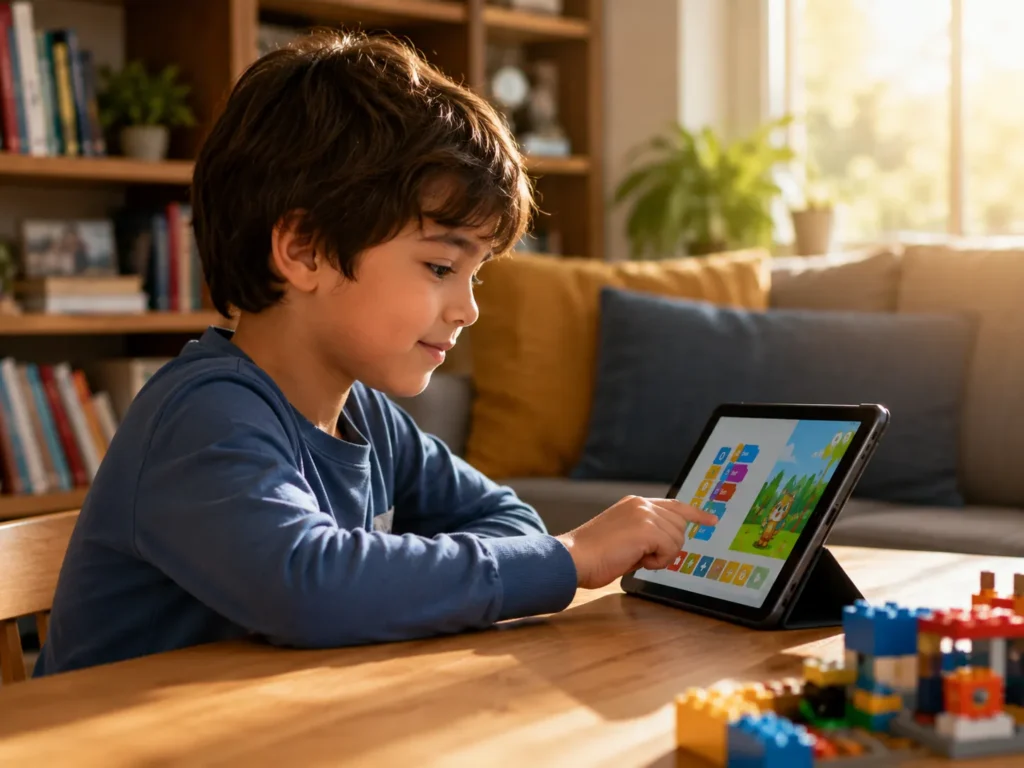
Not all tools are created equal. Here’s a comparison of the most common starting points for young coders:
| Tool | Best Age | Type | Best For |
|---|---|---|---|
| ScratchJr | 5–6 | Visual block | Animations, stories |
| Scratch | 7–10 | Visual block | Games, projects |
| Kodable | 5–8 | Puzzle-based | Logic foundations |
| ItsMyBot Live Class | 5–10 | Live 1:1 mentored | Real projects, progress tracking |
Apps can introduce concepts. But live instruction with a real mentor is what makes children actually progress. Read our full comparison of block-based vs text-based coding for kids to understand the difference.
You don’t need to wait for a perfect moment. But here are genuine readiness signals to look for:
Still unsure? Explore our guide on the best coding tools for kids in 2026 to see what your child can start with today.
Your child’s coding journey starts with one class.
Turn screen time into skill time — book a free demo for your 5–10 year old today.
❌ Mistake 1: Choosing an app instead of a structured course
Why it’s a problem: Apps keep kids entertained but rarely build real skills. Progress stalls without a mentor to guide and challenge them.
✅ Fix: Start with a live class. Apps can supplement — they shouldn’t lead.
❌ Mistake 2: Pushing too hard, too fast
Why it’s a problem: Forcing a 5-year-old into text-based coding kills curiosity before it has a chance to grow.
✅ Fix: Start with play-based block coding. Let excitement lead the pace.
❌ Mistake 3: Expecting results in one session
Why it’s a problem: Coding confidence builds over weeks, not hours. Parents who pull kids out early miss the breakthrough moment.
✅ Fix: Commit to at least 4–6 sessions before assessing progress.
❌ Mistake 4: Not celebrating small wins
Why it’s a problem: A child who finishes their first animation needs to feel that achievement — or the next session becomes a chore.
✅ Fix: Celebrate every project. Ask to see what they built. Show genuine interest.
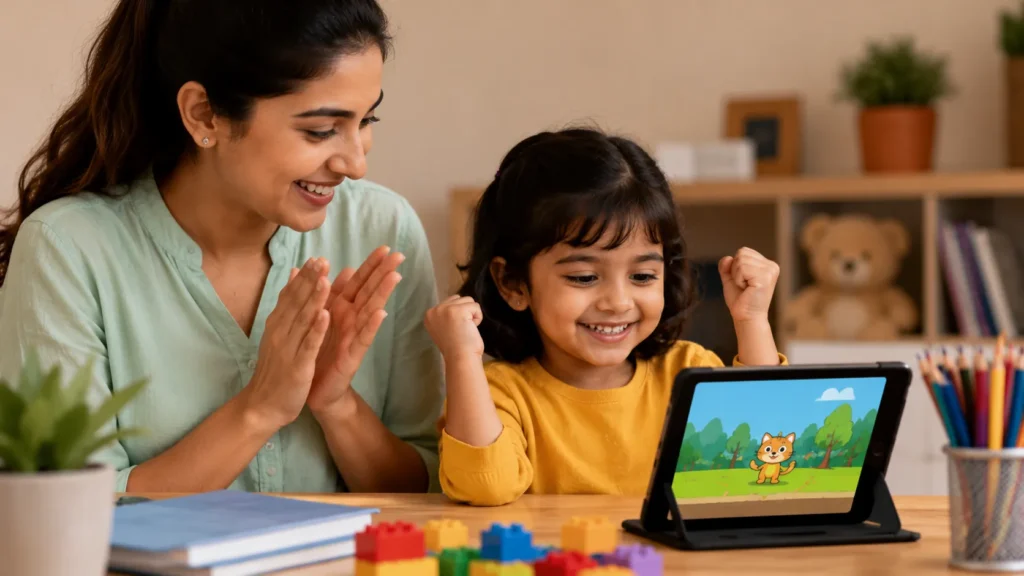
ItsMyBot’s Junior Coder course is built for exactly this age window. Every lesson adapts to your child’s pace, curiosity, and confidence level. Here’s how it works:
Free demo session — Your child tries a real lesson. No pressure, no commitment. You both see if it clicks.
Personalised curriculum — Lessons adapt to your child’s pace, interests, and skill level from day one.
Real projects from session one — No theory-heavy lessons. Kids build animations, games, and stories they’re proud of.
Parent progress updates — You’re never left guessing. We keep you informed every step of the way.
Global collaboration — Kids connect with young coders from around the world, building confidence alongside their skills.
Explore our full range of coding classes for kids or read about our approach to learning Scratch from the very beginning.
What You Now Know
A 5-year-old can absolutely learn to code — when the tools, the teaching, and the pace are right. We covered what they learn, why it matters, how to tell if your child is ready, and the common mistakes to avoid.
The window between ages 5 and 7 is genuinely special for absorbing pattern-based thinking. Wait too long, and the learning curve steepens — not because coding gets harder, but because curiosity is harder to spark later.
Your child’s first coding project is one session away. Book a free demo with ItsMyBot and let them surprise you.
Ready to turn your child’s screen time into skill time?
Can a 5-year-old really learn to code, or is it too young?
Yes. Research confirms children aged 5–7 are in a prime learning window for pattern-based thinking. With play-based block coding tools like ScratchJr, a 5-year-old can build animations and follow logic sequences in their very first session.
What coding tools are best for a 5-year-old beginner?
ScratchJr and Kodable are ideal starting points for ages 5–6. Both use visual drag-and-drop blocks — no typing required. For structured, guided progress, a live junior coding class with a mentor makes the biggest difference.
How is a coding class different from a coding app for young kids?
Apps introduce concepts but rarely build real skills. A live class provides a mentor who adapts to your child, identifies stuck points, and celebrates progress. The accountability and personalisation of a class is what drives genuine long-term development.
Does my child need any prior tech experience to start?
None at all. ItsMyBot’s Junior Coder course starts from absolute zero. The only requirement is basic tablet or touchscreen familiarity — which most 5-year-olds already have from everyday use.
How long does it take to see real progress in a 5-year-old’s coding?
Most children complete their first visible project within the first 1–2 sessions. Noticeable skill development — where kids can problem-solve independently — typically shows within 4–8 weeks of consistent weekly classes.
What if my child gets bored or loses interest in coding?
Boredom usually signals a poor curriculum match — not a disinterested child. At ItsMyBot, every lesson is personalised to your child’s interests. If they love animals, they build animal games. If they love space, they create space animations. Interest drives learning.

Online coding, AI, and robotics classes that help kids ages 6–18 build real skills — and confidence — one project at a time.
No commitment · Live class with an expert teacher
© ItsMyBot 2026. All Rights Reserved.