
By Poornima Sasidharan · Updated October 2026 · 11-minute read
At a Glance
Quick Facts
Kids can start puzzle coding games from about age 4, before they can read well.Scratch is free and designed for ages 8–16, and ScratchJr is designed for ages 5–7.Roblox Studio is free and uses Luau, a real programming language.Tweens (8–12) average more than 4.5 hours of screen media a day, but spend only a small share creating (Common Sense Media).Several top games have free versions, including Scratch, Roblox Studio, Code.org, and Lightbot’s Hour of Code edition.Analytical thinking is a core skill for 7 in 10 employers (WEF, 2025), and coding games build it early.
Your child loves games. You’d love for some of that screen time to teach real skills. Coding games promise exactly that, but there are hundreds, and they aren’t all equal.
Some teach real coding logic. Others are just tapping with a coding theme. And a game that’s perfect at 6 can feel babyish at 10.
This guide compares the 7 best coding games for kids by age, skills, platform, and cost. You’ll also learn when it’s time to move from games to real projects. If your child is ready for more structure, see our coding classes for kids.
Yes, the good ones do. They teach the core logic every programmer uses:
But there’s a limit. Puzzle games give kids a fixed problem with one right answer. Real coding means building something new from a blank screen. That’s why creative tools like Scratch and Roblox Studio are on this list too.
Coding games build the logic. Creating projects builds the coder.
| Game | Ages | Teaches | Language | Platform | Cost |
|---|---|---|---|---|---|
| Kodable | 4–10 | Sequencing, loops, conditions | Visual, then JavaScript | Web, iPad | Free and paid plans |
| Osmo Coding | 5–10 | Sequencing, loops | Physical blocks | iPad and Fire tablets | Paid kit |
| Lightbot | 8+ | Procedures, loops, conditions | Visual commands | iOS, Android, web | Paid app; free Hour of Code version |
| Scratch | 8–16 | Games, animation, logic | Block-based | Web, desktop, tablet | Free |
| Tynker | 7+ | Blocks to text coding | Blocks, Python, JavaScript | Web, iPad, Android | Free and paid plans |
| CodeCombat | 9+ | Real syntax through quests | Python, JavaScript | Web | Free levels and paid premium |
| Roblox Studio | 8+ (with guidance) | 3D game design, scripting | Luau | Windows, Mac | Free |
Best for: the youngest coders.
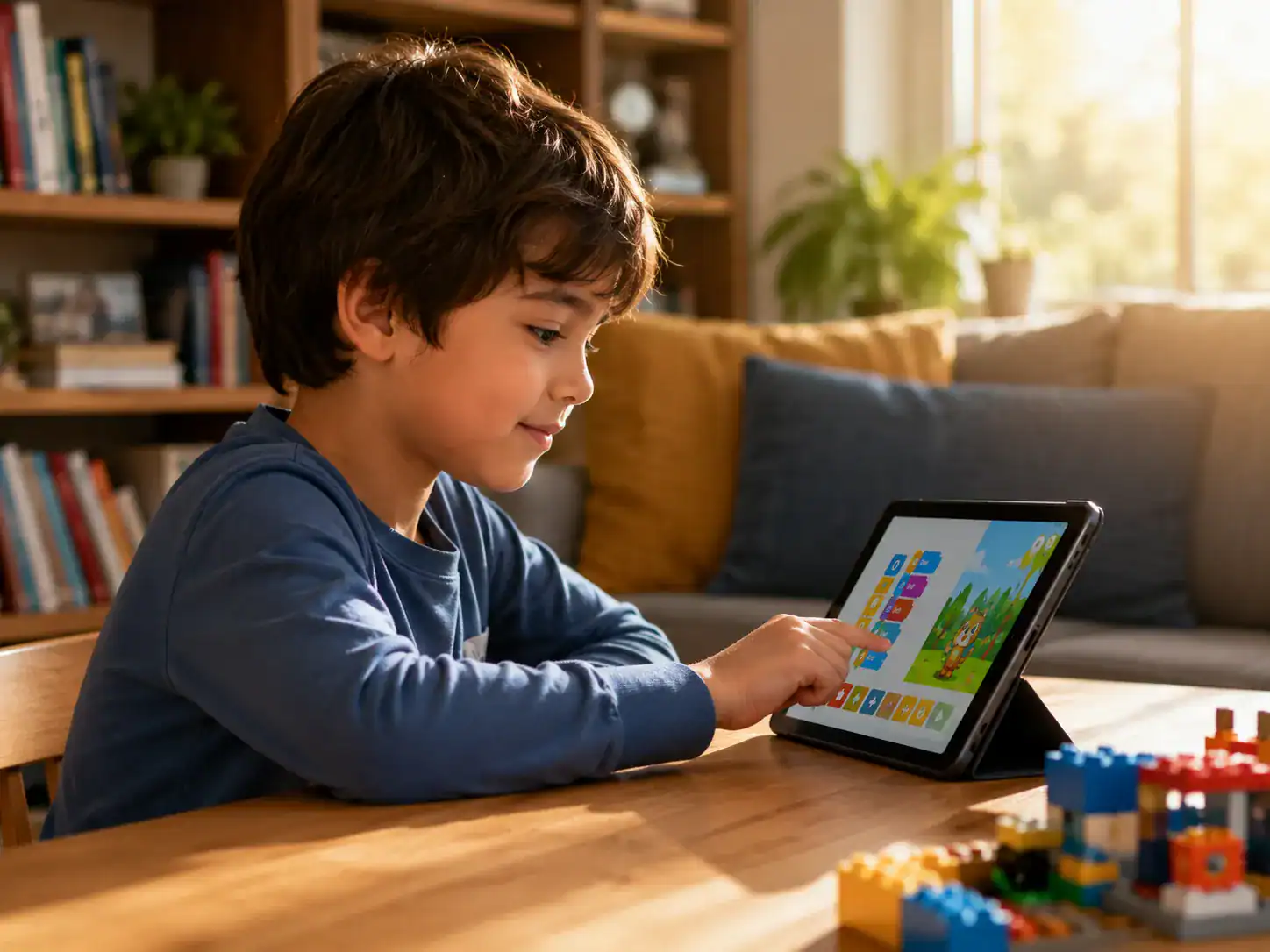
Kids guide friendly fuzzy characters through mazes using arrows, loops, and conditions. Later levels introduce real JavaScript concepts.
Best for: hands-on learners who like physical play.
Kids snap together physical coding blocks in front of a tablet to control a character on screen. It’s coding you can hold.
Love hands-on learning? See our must-have coding toys for kids.
Best for: pure logic puzzles.
Kids program a robot to light up tiles using commands, procedures, and loops. Levels get tricky fast, which makes it great for puzzle lovers.
Best for: creativity and building real games.
MIT’s free block-coding platform lets kids create games, animations, and stories, then share them with a global community. It’s the most important tool on this list.
Start with our complete guide to Scratch coding, the best Scratch coding games, or build a Flappy Bird game in Scratch.
Best for: a guided path from blocks to text.
Tynker offers game-based courses that start with blocks and move to Python and JavaScript. It also includes Minecraft modding.
Best for: learning real Python or JavaScript through an adventure game.
Kids type real code to move their hero, fight monsters, and solve quests. It’s one of the best ways to make typed syntax feel like play.
Best for: kids who love Roblox and want to build their own games.
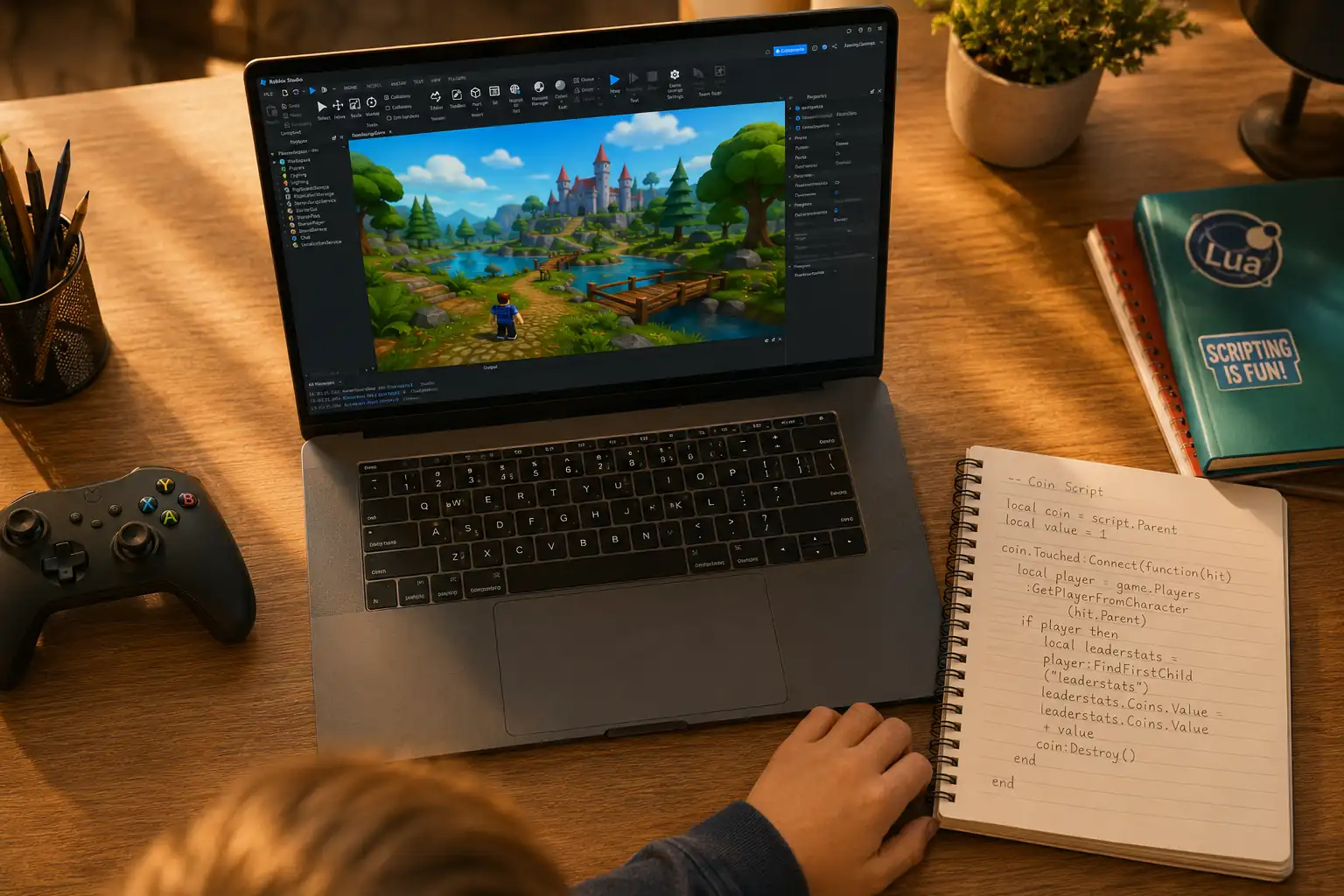
Roblox’s free game-building tool lets kids design 3D worlds and write Luau scripts. When kids write their own scripts, it’s real programming.
Read is Roblox coding real programming and our Roblox Studio guide for parents.
Compare Scratch and Code.org in Scratch vs Code.org, or browse more free online coding games.
| Age | Best picks | Why |
|---|---|---|
| 4–6 | Kodable, Osmo Coding, Code.org | No reading needed; big, simple visuals |
| 7–8 | Scratch, Tynker, Lightbot | Kids can read block labels and enjoy puzzles |
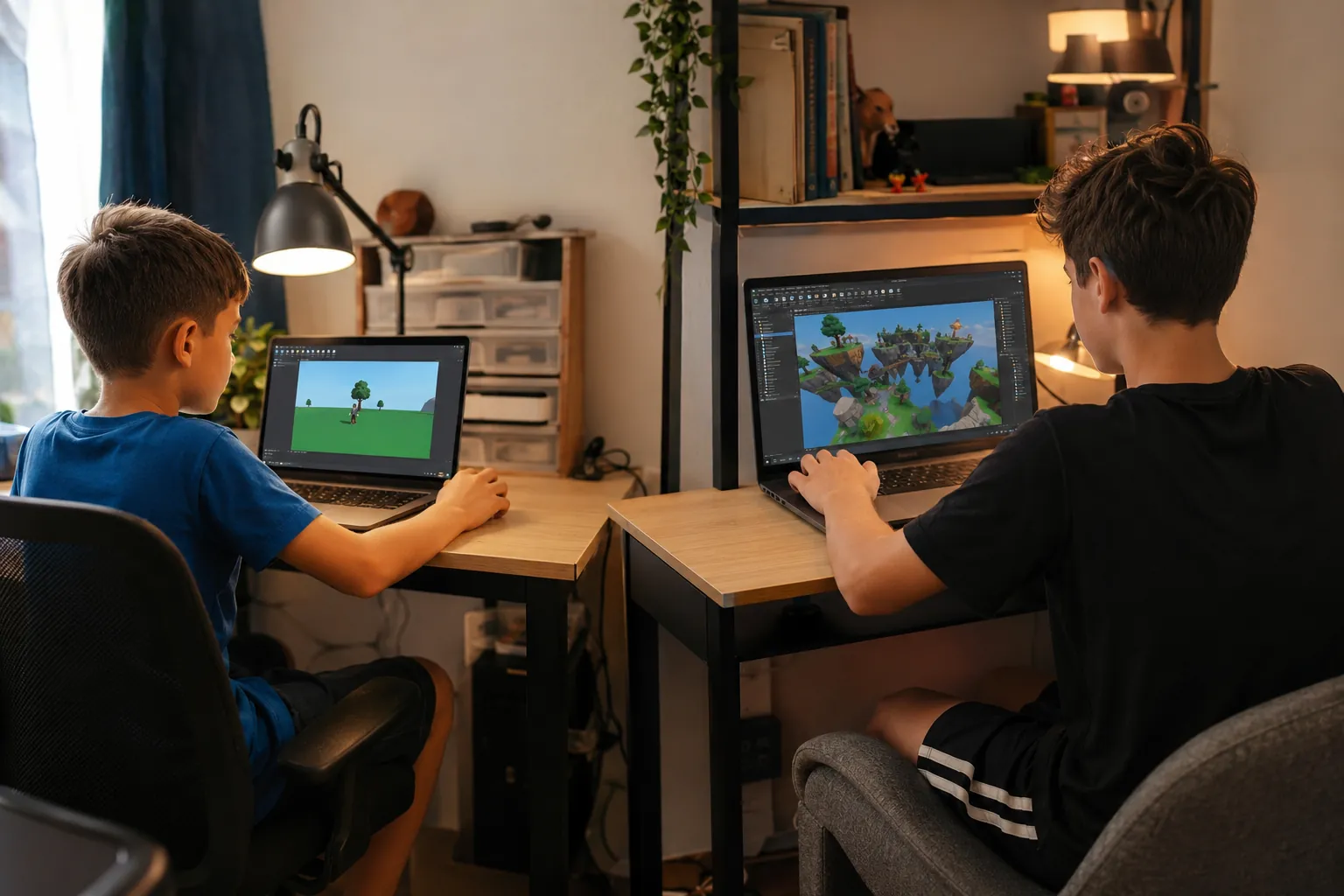
| 9–11 | Scratch, CodeCombat, Roblox Studio | Ready for creative projects and first typed code |
| 12–14 | CodeCombat, Roblox Studio, Swift Playgrounds | Ready for real syntax and bigger builds |
Rule of thumb: if your child finishes levels too easily, move up. If they’re frustrated after 3 tries, move down or play together.

Why it’s a problem: some apps are tapping games with a coding theme.
✅ Better approach: check that the game teaches loops, conditions, and debugging.
Why it’s a problem: kids learn logic but never build their own projects.
✅ Better approach: move to Scratch or Roblox Studio once puzzles feel easy.
Why it’s a problem: frustration makes kids quit.
✅ Better approach: use the age table above.
Why it’s a problem: coding games are still screen time.
✅ Better approach: set time limits and read our screen time alternatives guide.
Why it’s a problem: Scratch and Roblox have community features.
✅ Better approach: review settings and read is Scratch safe for kids.
To move your child from playing games to building real skills, follow these steps:
See block-based vs text-based coding for kids for when to make the switch.
Ready to Go Beyond Coding Games?
Turn your child’s love of games into real coding skills with a live mentor.
Book a Free Trial Class →
Illustrative example of a typical path, not a specific student record.
Meet Zara, 9. She loved Lightbot puzzles and finished every level in a month. Then she got bored.
What changed:
The result: Zara went from solving other people’s puzzles to designing her own games.
Good ones do. They teach sequencing, loops, conditionals, and debugging, the core logic of programming. Puzzle games build logic, while creative tools like Scratch and Roblox Studio teach kids to build original projects.
Scratch is the best free option. It’s made by MIT, designed for ages 8–16, and lets kids create unlimited games and animations. Code.org and Roblox Studio are also free, and Lightbot has a free Hour of Code version.
Kodable, Osmo Coding, and Code.org’s pre-reader activities suit 5-year-olds. They use pictures and arrows instead of text. ScratchJr is another great free option for ages 5–7.
Scratch, Lightbot, and Tynker are great for 8-year-olds. Scratch is best for creativity, Lightbot for logic puzzles, and Tynker for a guided path from blocks to text.
They do different jobs. Scratch is best for creating original games with blocks. CodeCombat teaches real Python or JavaScript syntax through quests. Many kids start with Scratch, then try CodeCombat around age 9–11.
Most are, especially puzzle games with no chat. Games with sharing or multiplayer features, like Scratch and Roblox, need parental controls and supervision.
Treat coding games as part of total screen time. Short, regular sessions of 20–45 minutes work well. Balance them with offline play and building projects.
When they finish levels easily or start asking to make their own games. That’s the time to move to Scratch, Roblox Studio, or a beginner coding class.
The best coding games for kids make logic feel like play. Start with a game that matches your child’s age, play together, and celebrate small wins.
Then help your child take the next step: building their own games. Games spark the interest. Creating builds the skills.
Want your child to build their own games, not just play them?
Book a Free Trial Class →
See All Courses →

Online coding, AI, and robotics classes that help kids ages 5–16 build real skills — and confidence — one project at a time.
No commitment · Live class with an expert teacher
© ItsMyBot 2026. All Rights Reserved.