
Is your child glued to Minecraft, obsessed with how robots move, or asking you why their tablet does what it does? Most parents sense their child is ready for something bigger — but aren’t sure when to act.
Waiting too long means missing a critical window when learning feels effortless. Starting too soon, without the right indicators, can lead to frustration that kills curiosity before it even begins.
This guide walks you through 7 concrete signs your child is ready to learn to code — so you can move forward with confidence, not guesswork.
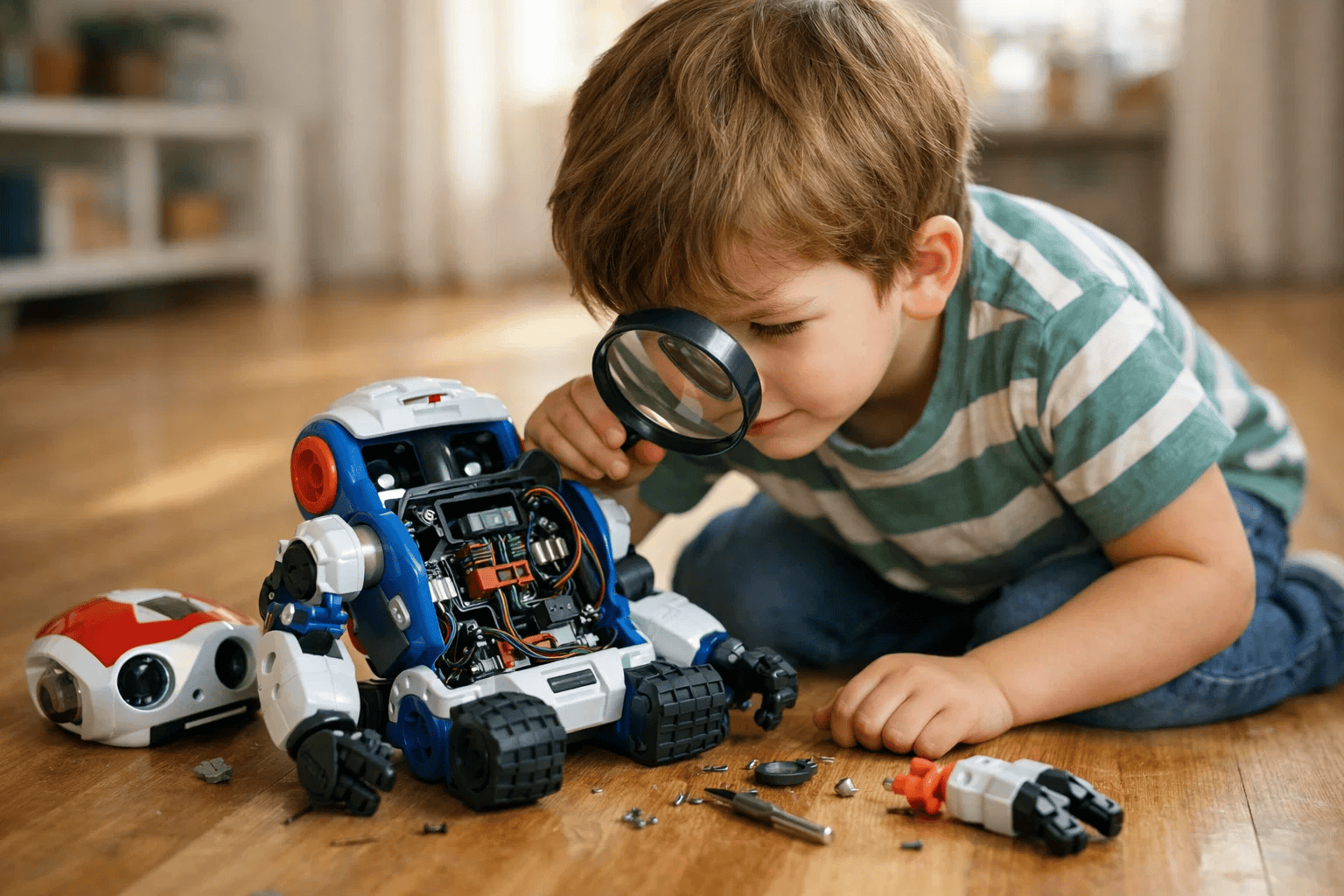
Curiosity is the most powerful predictor of coding readiness.
If your child constantly wonders how a TV remote sends signals, how Alexa “hears” them, or how a video game knows which button was pressed — that’s not just inquisitiveness. That’s the exact mindset that great coders are built on.
Coding is, at its core, the art of answering “how.” Every programme starts with a question and ends with a solution. Children who naturally think this way don’t just learn to code faster — they genuinely enjoy the process.
Understanding how things work is also the first step toward AI literacy for kids — one of the most critical skills of the decade. If your child is already asking about AI, voice assistants, or “how computers think,” they’re well ahead of the curve.
Does your child reach for LEGO, Jenga, or logic puzzles on a rainy afternoon?
Puzzle-solving and coding share the same mental architecture. Both require breaking a large challenge into smaller pieces, testing solutions, and adjusting when something doesn’t fit. Children who enjoy this process naturally are practising computational thinking — without even knowing it.
Look for children who:
This love of structured problem-solving is exactly what makes block-based vs text-based coding such a natural progression — starting with visual blocks before moving into typed syntax.
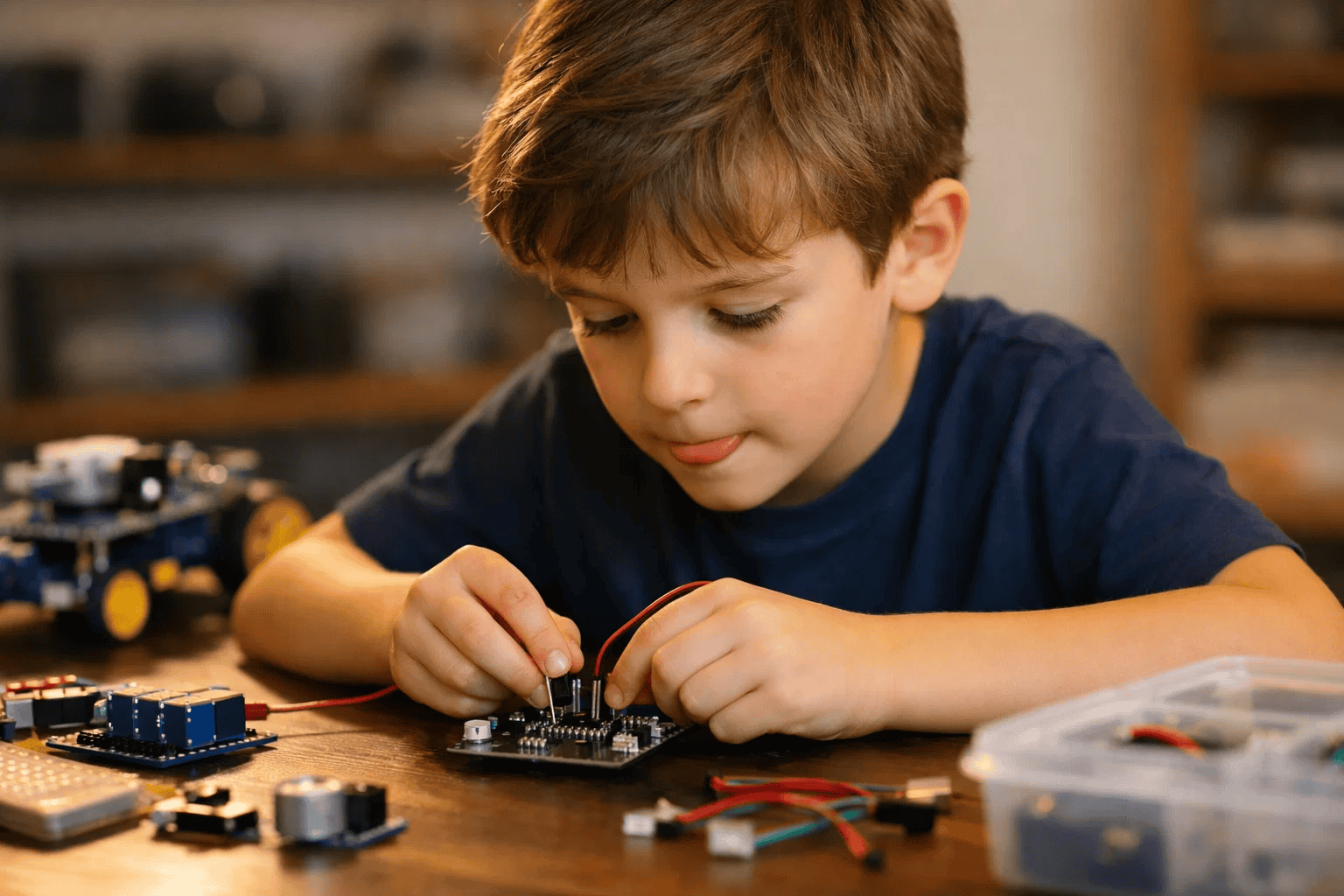
Persistence is the single most underrated sign of coding readiness.
Every coder — even professionals — spends hours debugging. The ability to sit with a problem, try again, and stay calm when things break is not just helpful in coding. It’s essential.
If your child retries a video game level ten times without quitting, or carefully rebuilds a collapsed tower, they’re already demonstrating the resilience that separates those who grow into confident programmers from those who give up after the first error.
Here’s what to observe:
According to research by MIT’s Education Lab, children who develop persistence skills before age 10 show 3× better retention in STEM subjects compared to those who don’t. Starting at the right time — as explored in our guide on the best age for kids to start coding — makes persistence far easier to build.
Coders aren’t just logical — they’re creators.
Some of the most gifted young programmers start not as “tech kids,” but as kids who build pillow forts, write comics, or design their own card games. Coding is the next natural tool for creative children — it gives their imagination a way to become something real and interactive.
If your child:
…then they’re already thinking like a developer. They have ideas. Coding teaches them how to build those ideas into something others can experience.
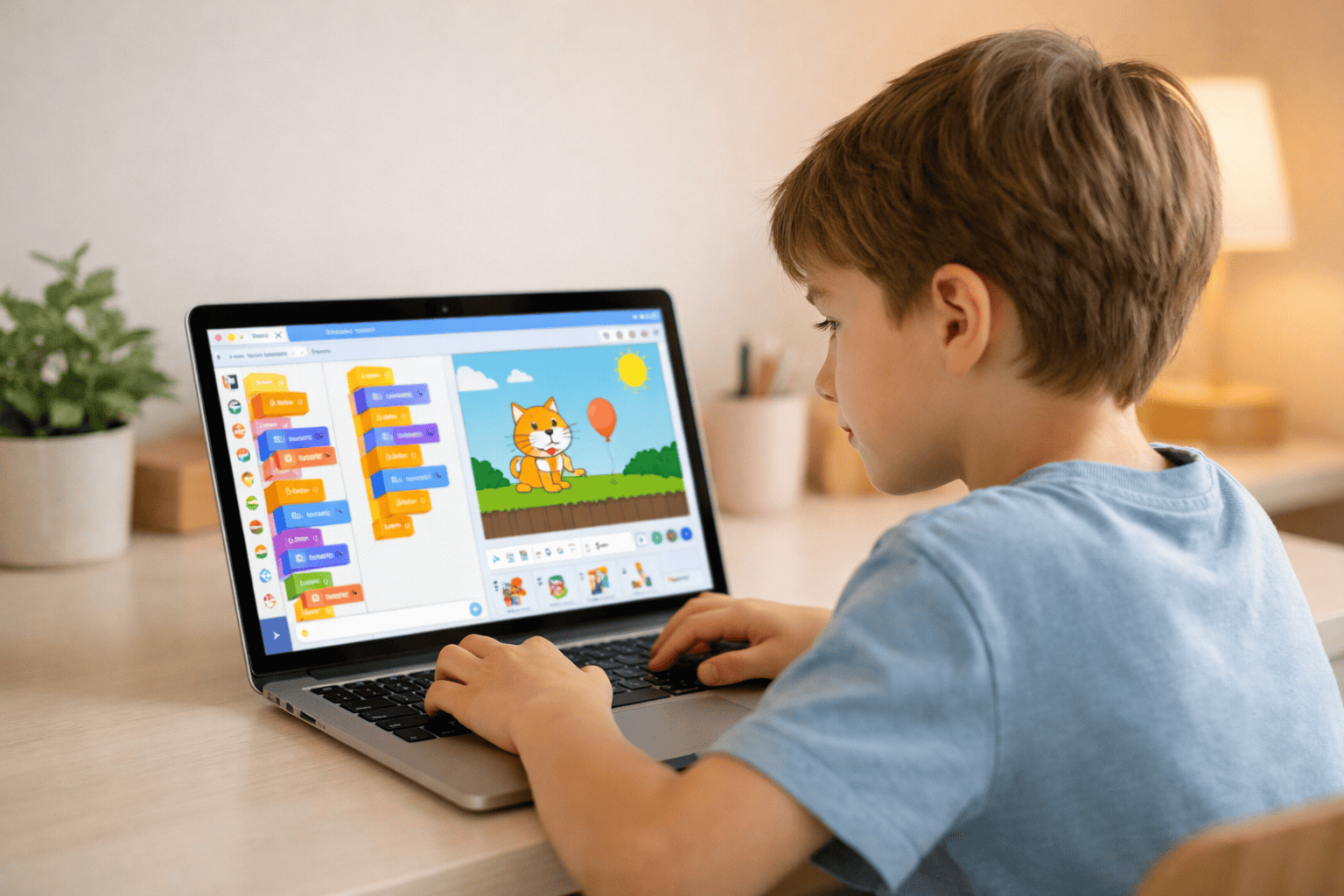
This creativity pairs beautifully with platforms like Scratch, where children can build animated stories, games, and interactive projects — as seen in these creative Scratch projects for kids.
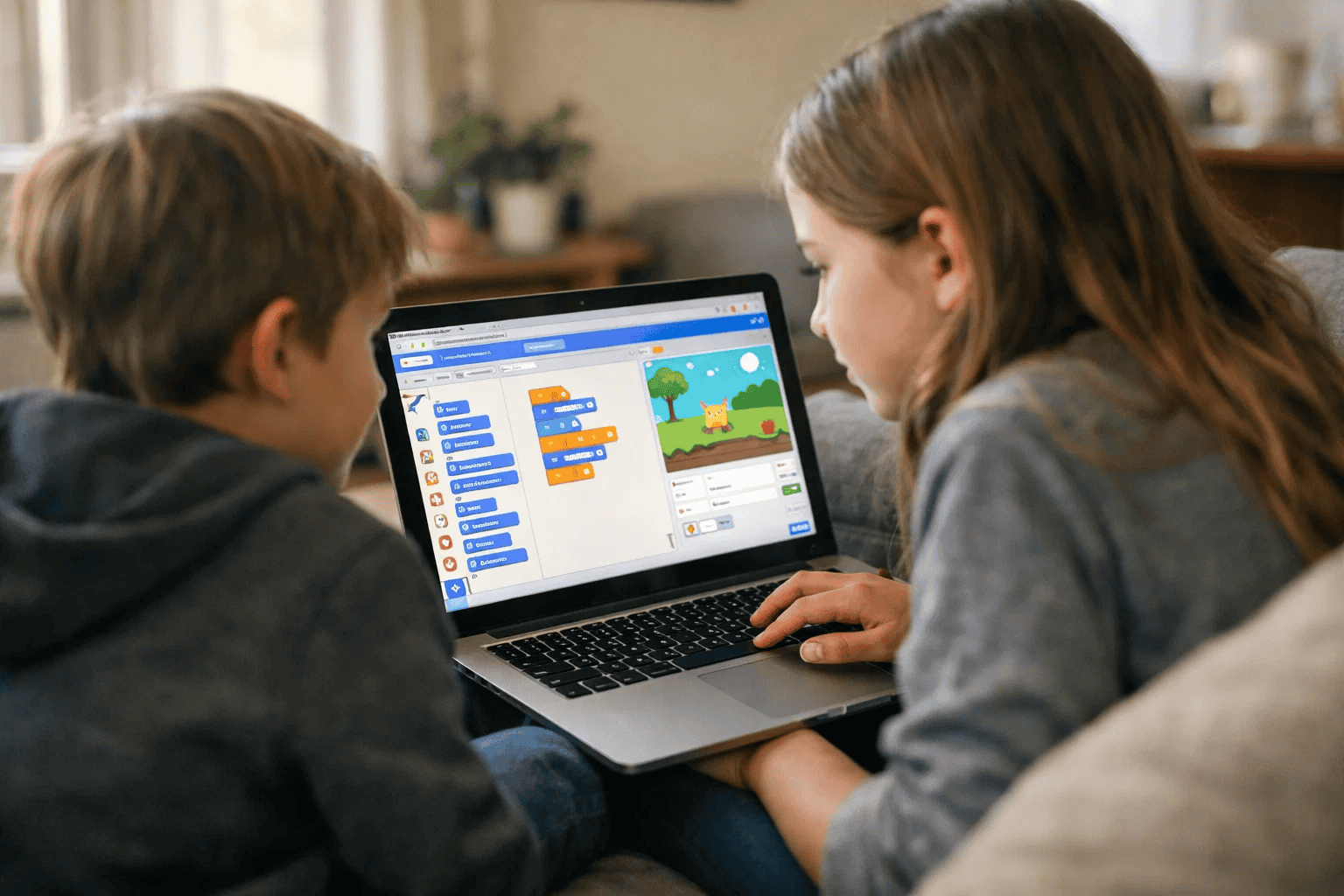
Nearly every child who eventually says “I want to make a video game” is expressing something important.
That statement alone is one of the clearest signs your child is ready to learn to code. Game development requires sequencing, logic, creativity, and problem-solving — all at once. Children who are drawn to games aren’t just consumers. They’re future builders who haven’t found the right tools yet.
Watch for these cues:
When they’re ready to go from playing to building, comparing platforms like Scratch vs Code.org is a great starting point to find the right fit.
Coding is a deeply sequential skill. Every programme runs in order, and one step out of place can break the whole thing.
Children who can follow multi-step instructions without losing track are naturally prepared for coding logic. This doesn’t mean they need to be perfectly obedient — it means they can hold a sequence in their head, complete it, and understand why the order matters.
You’ll notice this in children who:
This sequential thinking translates directly into understanding how coding programmes are structured, from simple Scratch animations to more advanced Python projects.
In 2026, the most future-ready children aren’t just curious about coding — they’re curious about artificial intelligence, automation, and how machines “think.”
If your child:
…they’re already thinking like tomorrow’s technologist.
This is the ideal entry point for Python coding challenges for beginners, or for exploring how AI is used in everyday life through best free AI tools for kids.
“The children who ask ‘how does AI know that?’ are the ones building AI in 10 years.” — A common observation among STEM educators working with children aged 8–14.

Recognising readiness is just the first step. Here’s how to move forward:
For a full breakdown of what to look for in a programme, explore our detailed guide on how to choose the right coding course for your child.
❌ Mistake 1: Choosing the wrong starting language
❌ Mistake 2: Pushing progress over passion
❌ Mistake 3: Buying expensive hardware too early
❌ Mistake 4: Treating coding as a solo activity
❌ Mistake 5: Ignoring the signs of burnout
Most children show signs of readiness between ages 5 and 7, though it varies by individual. Visual block-based platforms work well from age 5, while text-based coding like Python is better suited for children aged 10 and above. Learn more in our guide on the best age for kids to start coding.
Not at all. Your role is to encourage curiosity and celebrate progress — not to teach syntax. A structured course with expert mentors handles the technical side while you provide emotional support and motivation.
Readiness develops gradually. Even 2–3 signs are enough to start with light, playful exploration — like free Scratch projects or basic logic games. Pushing too hard too early can backfire, but gentle exposure always helps.
No. Some of the most creative coders are children who love storytelling, art, or music. Coding is a creative skill as much as a logical one. Children who build worlds in their imagination often take to game development and animation naturally.
Scratch is widely regarded as the best starting platform for children aged 6–10. It uses colourful drag-and-drop blocks that teach sequencing and logic without requiring any typing skills. Explore Scratch vs Code.org to compare options.
Yes. Many coding activities can be done offline — through robotics kits, card-based logic games, or unplugged coding activities. Once children discover that coding is about creating things — not just staring at a screen — their relationship with technology shifts entirely.
Children who start coding before age 12 have a significant head start in STEM careers, which dominate the fastest-growing job categories of the next decade. Beyond tech careers, coding builds logical reasoning, problem-solving, and creative confidence that benefit every field — from medicine to design to entrepreneurship.
The signs that your child is ready to learn to code aren’t hidden — they’re right there in the questions they ask, the games they play, and the way they tackle a tough puzzle without giving up.
Coding isn’t about turning your child into a programmer. It’s about giving their curiosity, creativity, and persistence a structured outlet that builds real-world confidence and future-ready skills.
If you’ve spotted even 3 of the 7 signs in this article, the time to act is now. The world is moving faster than ever — and the children who start building skills today are the ones who’ll shape tomorrow.
Your child’s curiosity deserves more than a screen — it deserves a direction.
Every child who asks “how does that work?” is already thinking like a builder. All they need is the right environment to explore, create, and grow — at their own pace, in their own way..
Here’s what your child gets:
Don’t wait for the “perfect moment” — the signs are already there.
👉 Explore Courses for Your Child → and take the first step toward turning screen time into skill time.