How Coding Helps Kids with ADHD Build Focus, Confidence, and Future-Ready Skills

Reading Time: 9 mins

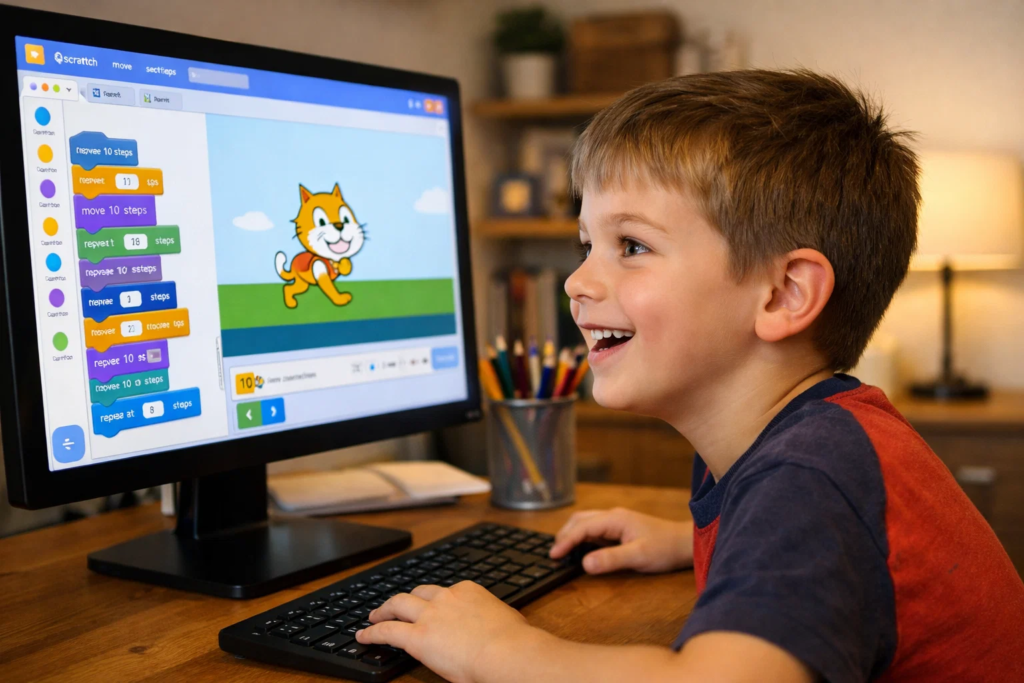
Coding for kids with ADHD โ€” focused child learning to code at home on a laptop with block-based programming interface

Introduction

Does your child have ADHD and struggle to sit through a full lesson โ€” but light up the moment theyโ€™re given something to build or create?

Youโ€™re not imagining it. That burst of energy and curiosity isnโ€™t a barrier to learning. With the right activity, it becomes a superpower. Coding for kids with ADHD turns that restless creativity into something structured, rewarding, and genuinely fun.

In this guide, youโ€™ll discover exactly why coding works so well for neurodiverse learners โ€” and how to help your child get started the right way.
Why Is Coding Such a Natural Fit for Kids with ADHD?

ADHD child engaged and smiling while using Scratch coding platform on desktop computer

ADHD brains thrive on novelty, challenge, and immediate feedback. Most traditional school subjects donโ€™t deliver any of that quickly enough.

Coding is different. Every line written, every block placed, every game tested โ€” it gives a child instant results. The screen reacts. The character moves. Something actually happens.

This is called the feedback loop, and itโ€™s exactly what an ADHD brain needs. Unlike reading a page of text or listening to a 40-minute lecture, coding keeps children actively engaged because the environment responds to them in real time.

Why coding connects with ADHD learners:

  • Immediate results โ€” children see what their code does the moment they run it
  • Creative control โ€” they make the decisions, which sustains motivation
  • Problem-solving structure โ€” breaking a project into small steps mirrors how ADHD-friendly tasks should be organised
  • Hyperfocus compatibility โ€” coding can trigger hyperfocus, turning a natural ADHD trait into productive deep work
  • Visible progress โ€” every small win is visible, which builds confidence over time

How Does Coding Build Focus in Children with ADHD?

This is one of the most common questions parents ask. The short answer: coding doesnโ€™t force focus โ€” it earns it.

When a child is working on a coding project they care about โ€” whether itโ€™s a game, an animation, or a simple app โ€” they enter a state of voluntary concentration. Theyโ€™re not fighting their attention. Theyโ€™re directing it toward something that matters to them.

Research in neurodiverse education consistently shows that interest-driven learning improves sustained attention in children with ADHD. Coding is almost perfectly designed for this, because every project begins with what the child wants to create.

Hereโ€™s how coding builds focus step by step:

  • Step 1: Choose a project โ€” the child picks what they want to build. Ownership increases engagement immediately.
  • Step 2: Break it down โ€” a mentor or parent helps divide the goal into 5-minute tasks. Manageable chunks prevent overwhelm.
  • Step 3: Write, test, adjust โ€” the trial-and-error cycle keeps the brain active and curious.
  • Step 4: Celebrate small wins โ€” each working feature reinforces persistence and self-belief.
  • Step 5: Share the result โ€” showing their creation to others gives a meaningful endpoint and a confidence boost.

This five-step rhythm mirrors the kind of structured, outcome-focused learning that works best for ADHD learners. Itโ€™s the same approach we use at ItsMyBot โ€” and itโ€™s why children whoโ€™ve struggled in traditional classrooms often thrive in our coding environment.

Explore our coding classes for kids to see how we structure learning for every type of learner.

What Coding Skills Does a Child with ADHD Actually Develop?

Two kids with ADHD collaborating on a coding project, building teamwork and communication skills

Parents often worry that coding is โ€œtoo technicalโ€ for a child who already finds school difficult. In reality, the skills your child builds through coding go far beyond writing lines of code.

Cognitive and academic skills:

  • Logical thinking โ€” sequencing steps in code trains the brain to think in order, which directly supports reading and mathematics
  • Working memory โ€” keeping track of variables and conditions strengthens short-term memory
  • Planning and organisation โ€” building a project from start to finish develops executive function, one of the core areas affected by ADHD
  • Resilience โ€” debugging code (finding and fixing mistakes) teaches children that failure is part of the process, not the end of it

Social and emotional skills:

  • Confidence โ€” completing a project gives a genuine sense of achievement, not just participation
  • Communication โ€” explaining their code to others builds language and presentation skills
  • Collaboration โ€” paired coding or group projects encourage teamwork without the pressure of physical group dynamics

These arenโ€™t just โ€œnice-to-haves.โ€ For a child with ADHD, building executive function through an activity they love is one of the most effective and evidence-aligned approaches available.

Check out our STEM and robotics classes for more ways your child can build these skills through hands-on technology learning.
Which Types of Coding Activities Work Best for ADHD Kids?

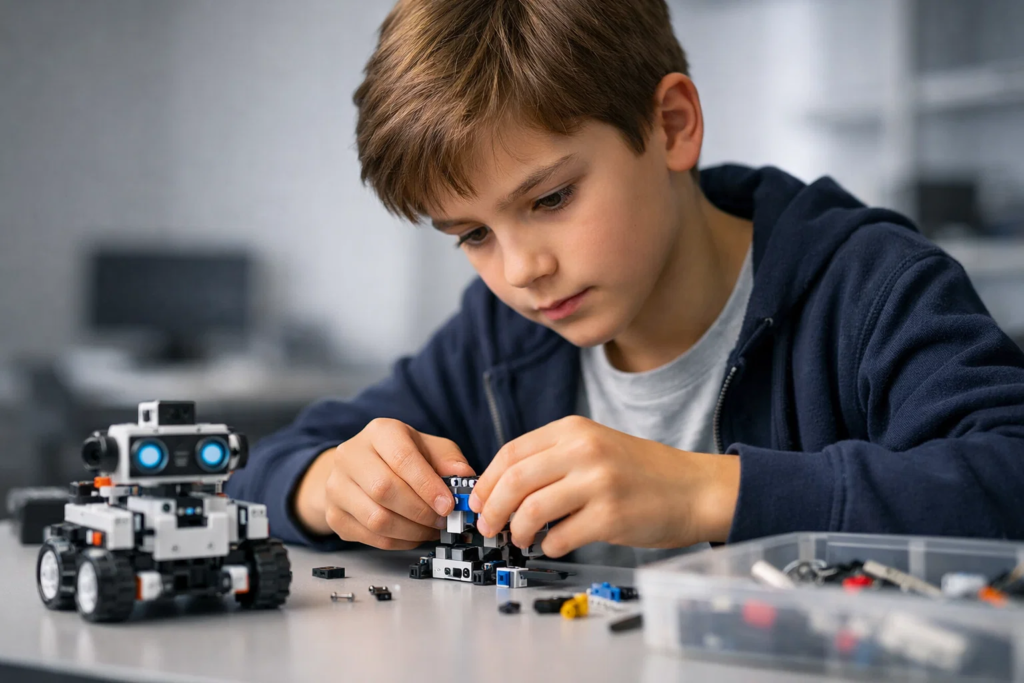
 Child with ADHD building a robotics project โ€” hands-on coding and physical computing activity

Not all coding is created equal. The right starting point makes a huge difference for a child with ADHD.

Best coding tools and platforms for ADHD learners:

  • Scratch โ€” visual, block-based coding that removes syntax barriers. Children build games and animations with drag-and-drop simplicity. Perfect for ages 7โ€“12. Learn more about how to set up Scratch 3.0 for kids.
  • Roblox Studio โ€” for older children (10+), building games in Roblox combines creativity with coding logic in an environment they already love. Explore our guide on how to create a game on Roblox.
  • Python for beginners โ€” once a child is ready for text-based coding, Pythonโ€™s clean, readable syntax is the most ADHD-friendly option. Short scripts with visible results keep momentum going.
  • AI projects โ€” building simple AI tools gives children a sense of genuine innovation. See our guide on AI projects for kids for age-appropriate ideas.
  • Robotics โ€” physical computing bridges screen and real world. Children code a robot and watch it move, combining tactile engagement with logical thinking.

What makes an activity ADHD-friendly:

  • Short sessions (20โ€“30 minutes) with a visible outcome
  • A creative goal the child chooses
  • Immediate feedback from the program
  • No judgment for mistakes โ€” just iteration

How Can Parents Support Their Childโ€™s Coding Journey?

Parent and child with ADHD sitting together, reviewing a coding project โ€” supportive home learning environment

You donโ€™t need to know how to code to support your child. You just need to create the right environment โ€” and ask the right questions.

What parents can do at home:

  • Set a consistent coding time โ€” 20โ€“30 minutes, same time each day, works better than long, irregular sessions
  • Let them lead โ€” ask โ€œwhat do you want to build?โ€ rather than assigning a topic. Ownership drives motivation.
  • Celebrate process, not just product โ€” โ€œI love how you kept trying when that didnโ€™t workโ€ builds more resilience than โ€œwell done for finishingโ€
  • Stay curious โ€” ask them to show you what they made. Children explain better when they feel their work is genuinely valued.
  • Find structured guidance โ€” a structured coding programme with patient mentors removes the frustration that can derail ADHD learners working independently

At ItsMyBot, we keep parents informed every step of the way. Our courses adapt to your childโ€™s pace, and youโ€™ll always know what theyโ€™re working on and how theyโ€™re progressing.

If youโ€™re looking for flexible options, explore our after-school coding programmes or weekend classes designed for busy families.

What Are Common Mistakes Parents Make When Choosing Coding for an ADHD Child?

Getting the approach right matters. These are the most common pitfalls โ€” and how to avoid them.

  • โŒ Mistake 1: Starting with too-complex tools Why itโ€™s problematic: Text-based languages with rigid syntax cause early frustration and disengagement. โœ… Correct approach: Start with visual block-based tools like Scratch. Build confidence before introducing typed code.
  • โŒ Mistake 2: Sessions that are too long Why itโ€™s problematic: An hour-long session feels like a punishment for an ADHD learner. Attention collapses and negative associations form. โœ… Correct approach: Keep sessions to 20โ€“30 minutes, especially at the start. Quality over quantity.
  • โŒ Mistake 3: Choosing the topic for them Why itโ€™s problematic: When the goal isnโ€™t theirs, motivation disappears quickly. ADHD learners need genuine ownership. โœ… Correct approach: Ask what they want to make โ€” a game, a story, an animation. Let them drive.
  • โŒ Mistake 4: Skipping structured mentorship Why itโ€™s problematic: Self-directed learning without guidance leads to loops of frustration and quitting. โœ… Correct approach: A structured programme with experienced mentors makes a measurable difference. See our coding classes for kids for age-appropriate options.
  • โŒ Mistake 5: Expecting linear progress Why itโ€™s problematic: ADHD learning is rarely linear. Treating plateaus as failures damages confidence. โœ… Correct approach: Celebrate curiosity and persistence. Progress in coding is often invisible before itโ€™s suddenly visible.

Conclusion

Coding doesnโ€™t just teach your child a technical skill. It gives them a place where how they think becomes an advantage.

The ADHD brain โ€” curious, fast, drawn to creativity and immediate rewards โ€” is genuinely well-suited to the way coding works. The right environment, the right tools, and a mentor who understands how your child learns can unlock something remarkable.

Key takeaways:

  • Coding works for ADHD because it provides immediate feedback, creative control, and a structure that works with โ€” not against โ€” how ADHD brains function
  • The skills go beyond code โ€” executive function, resilience, and confidence all grow through the process of building something
  • The right starting point matters โ€” visual tools, short sessions, and child-led goals make the biggest difference early on
  • Parental involvement amplifies results โ€” you donโ€™t need to code yourself; you just need to stay curious and supportive

Your child doesnโ€™t need to change to learn. They need the right opportunity.

FAQ

What is the best coding language for kids with ADHD?

Visual block-based tools like Scratch are the best starting point for most children with ADHD. They eliminate typing and syntax barriers, allowing children to focus on logic and creativity. Once confidence builds, Python is the most ADHD-friendly text-based language due to its clean, readable structure.

At what age can a child with ADHD start coding?

Most children with ADHD can begin coding as early as age 6โ€“7 using age-appropriate tools like Scratch Jr. By ages 8โ€“10, block-based Scratch is ideal. Text-based coding is generally introduced from age 11โ€“12, depending on the childโ€™s readiness and interest.

Does coding actually help with ADHD symptoms?

Coding doesnโ€™t treat ADHD, but it can meaningfully support the skills most affected by it โ€” including focus, planning, working memory, and emotional regulation. Interest-driven learning has a well-established positive effect on sustained attention in children with ADHD.

How long should a coding session be for a child with ADHD?

Start with 20โ€“30 minute focused sessions. This is long enough to make meaningful progress but short enough to prevent attention fatigue. As the child builds comfort and enthusiasm, sessions can gradually extend.

What if my child gets frustrated and wants to give up?

Frustration is part of coding for every learner โ€” not just children with ADHD. The key is having a mentor or structured programme that normalises debugging and reframing mistakes as part of the process. Short-term frustration often precedes a breakthrough.

Is online coding better than in-person for kids with ADHD?

Both can work well. Online coding with live mentors combines the comfort of a familiar environment with structured guidance. ItsMyBotโ€™s personalised, live online courses are designed to adapt to each childโ€™s pace, which works particularly well for neurodiverse learners.

How does coding compare to other after-school activities for ADHD children?

Unlike many passive or high-stimulation activities, coding sits in a productive middle ground โ€” itโ€™s engaging, creative, and structured. It builds skills with real-world value while keeping the ADHD brain actively involved. It also develops transferable skills like logical thinking and resilience that support academic performance.

Can coding help an ADHD child do better at school?

Yes, indirectly but meaningfully. Coding strengthens executive function, which includes planning, sequencing, and working memory โ€” all skills that support academic performance across subjects. Many parents report improvements in maths and reading comprehension after sustained coding practice.

Ready to Turn Your Childโ€™s Curiosity into Confidence

Your child doesnโ€™t need to fit into a traditional classroom to thrive. They need the right environment โ€” one thatโ€™s built around how they think, create, and explore.

At ItsMyBot, weโ€™ve helped hundreds of children โ€” including neurodiverse learners โ€” discover that coding isnโ€™t just something they can do. Itโ€™s something they love to do.

Our personalised, industry-level courses adapt to your childโ€™s pace. Our mentors are patient, experienced, and genuinely invested in every childโ€™s progress. And youโ€™ll be kept informed every step of the way.

Hereโ€™s what your child gets with ItsMyBot:

  • A free demo class โ€” no commitment, no pressure
  • Courses built for ages 5โ€“15, from complete beginners to confident builders
  • Live, mentor-led sessions in a safe, structured online environment
  • Projects your child actually wants to work on
  • Progress updates so you always know how theyโ€™re growing

The best time to start is now. Screen time your child is already spending can become skill time that shapes their future.

๐Ÿ‘‰ Book a Free Demo Class โ€” and let your child experience what learning feels like when itโ€™s built around them.

Tags

Share

Preetha Prabhakaran

I am passionate about inspiring and empowering tutors to equip students with essential future-ready skills. As an Education and Training Lead, I drive initiatives to attract high-quality educators, cultivate effective training environments, and foster a supportive ecosystem for both tutors and students. I focus on developing engaging curricula and courses aligned with industry standards that incorporate STEAM principles, ensuring that educational experiences spark enthusiasm and curiosity through hands-on learning.

Related posts

Empowering children with the right skills today enables them to drive innovation tomorrow. Join us on this exciting journey, and let's unlock the boundless potential within every child.
ยฉ ItsMyBot 2026. All Rights Reserved.