
Difference Between IoT and Robotics: A Complete Guide for Kids

Reading Time: 11 mins

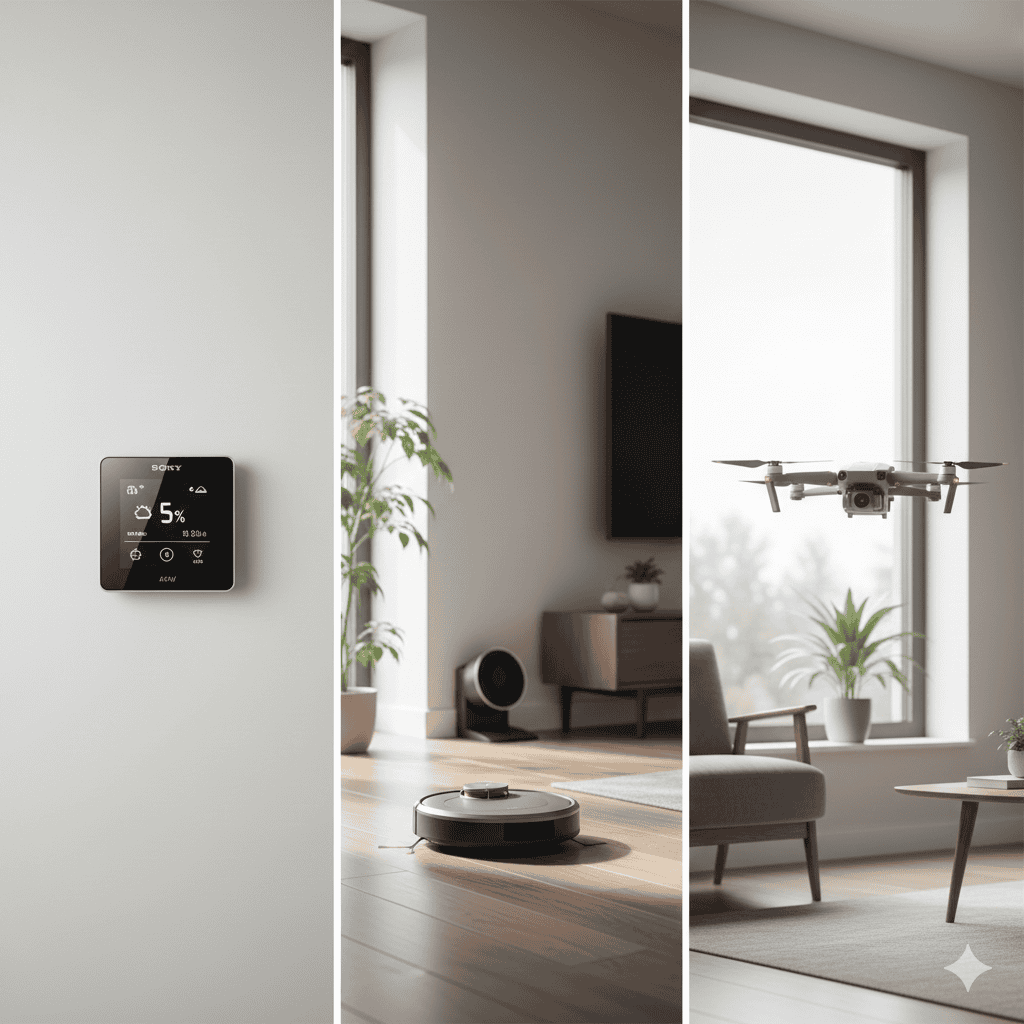
Visual comparison showing difference between IoT smart devices and robotics robot demonstrating distinct technologies for educational purposes

What Are IoT and Robotics?

You hear about IoT and robotics everywhereโ€”in school projects, tech news, and future career discussions. But when someone asks you to explain the difference, you draw a blank.

Itโ€™s frustrating when these terms get mixed up. Your teacher mentions smart homes and robots in the same sentence, making everything seem like one big blur. How do you know if your project idea is IoT, robotics, or both?

Understanding the difference between IoT and Robotics becomes crystal clear when you learn what each technology does and how they serve different purposes. Think of it this way: IoT connects devices to share information, while robotics creates machines that move and perform physical tasks.

Research shows that while IoT excels in data connectivity and monitoring, robotics focuses on automating physical tasks with precision and consistency. Both technologies serve different but complementary purposes.

What is IoT?

IoT (Internet of Things) connects everyday objects to the internet so they can collect data, share information, and be controlled remotely. Your smart thermostat adjusting temperature, fitness tracker counting steps, or smart speaker playing musicโ€”these are all IoT devices working behind the scenes.

IoT focuses on connectivity and data exchange. These systems have sensors that gather information, send it over networks, and allow you to monitor or control devices from anywhere. Learn more about the basic components of an IoT system to understand how these parts work together.

What is Robotics?

Robotics involves designing, building, and programming machines that can perform physical tasks automatically or through human control. Robots have mechanical parts like wheels, arms, or grippers that move and interact with their environment.

Robotics combines mechanics, electronics, and programming to create machines that do work. Whether itโ€™s a line follower robot navigating a path or an industrial robot assembling cars, robotics is about physical action and manipulation.
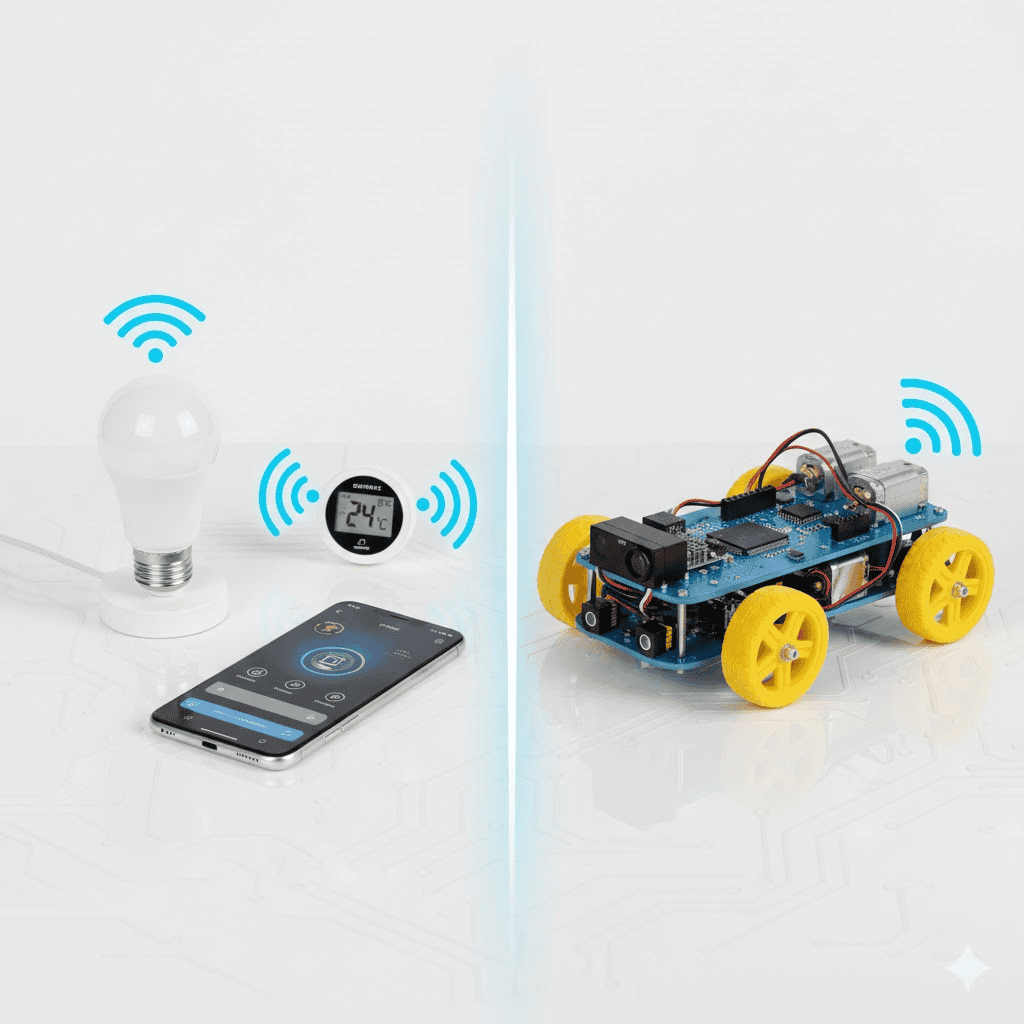
Side-by-side comparison illustrating difference between IoT connected devices and physical robotics systems for student learning

Key Differences: IoT vs Robotics

Understanding the difference between IoT and Robotics requires looking at several key factors. Letโ€™s break them down clearly.

Primary Purpose Comparison

IoT: Data Collection and Connectivity

  • Monitors environments and gathers information
  • Shares data across networks and devices
  • Enables remote control and automation
  • Focuses on intelligence through information

Robotics: Physical Action and Tasks

  • Performs mechanical movements and operations
  • Interacts directly with physical objects
  • Executes tasks requiring force or precision
  • Focuses on intelligence through action

Physical vs Virtual Operations

IoT Characteristics:

  • Minimal or no moving parts (mostly sensors and chips)
  • Works primarily through data transmission
  • Can be embedded in existing objects
  • Examples: Smart thermostats, fitness trackers, security cameras

Robotics Characteristics:

  • Significant mechanical components (motors, actuators, joints)
  • Works through physical manipulation
  • Requires structural design for movement
  • Examples: Robot vacuums, drone delivery systems, assembly robots

The fundamental difference lies in their core purposes: IoT specializes in data collection and remote management, while robotics focuses on mechanical automation and physical tasks.

Explore beginner robotics kits to see these mechanical components in action.

Complexity and Cost

AspectIoTRobotics
Entry Cost$10-50 for basic projects$30-100 for starter kits
ComponentsSensors, microcontrollers, connectivityMotors, chassis, sensors, control systems
ProgrammingNetwork communication, data processingMotion control, sensor integration, decision logic
Build Time1-3 hours for simple projects3-8 hours for basic robots

Skills Required

For IoT Projects:

  • Understanding sensor types and data collection
  • Network connectivity (Wi-Fi, Bluetooth, cellular)
  • Cloud platforms and data visualization
  • Basic programming for data handling

For Robotics Projects:

  • Mechanical assembly and design principles
  • Motor control and power management
  • Sensor-actuator coordination
  • Advanced programming for autonomous behavior

Students often start with block-based coding before advancing to complex robotics programming.
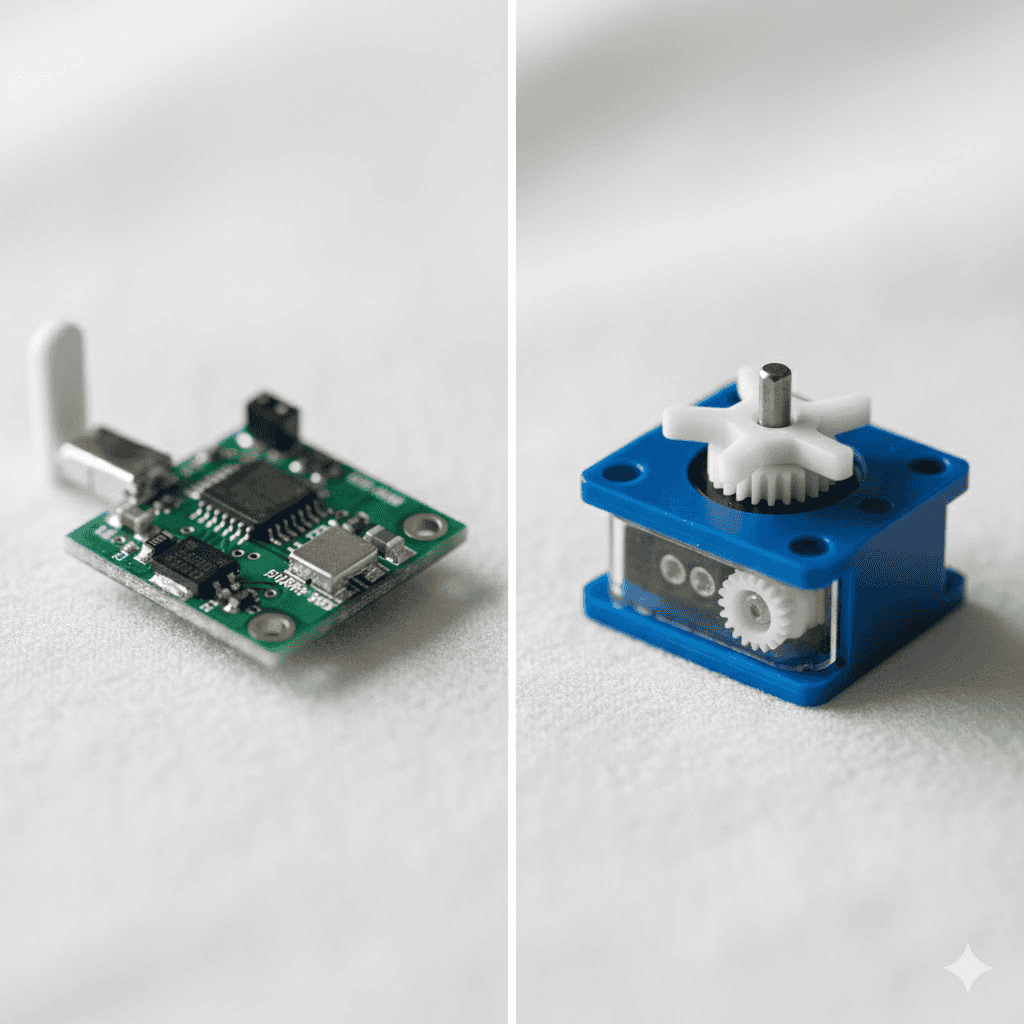
Detailed close-up comparison showing IoT sensor versus robotics motor highlighting physical difference between technologies

How IoT and Robotics Work Together

Hereโ€™s where it gets excitingโ€”the difference between IoT and Robotics doesnโ€™t mean they work separately! Modern technology often combines both to create powerful solutions.

IoT-Enabled Robotics

When you add IoT capabilities to robots, you create smart machines that can:

  • Communicate with other devices โ€” Robot vacuums that coordinate with smart home systems
  • Upload performance data โ€” Industrial robots sending maintenance alerts to cloud platforms
  • Receive remote commands โ€” Drones controlled through internet connections
  • Share sensor information โ€” Agricultural robots reporting soil conditions in real-time

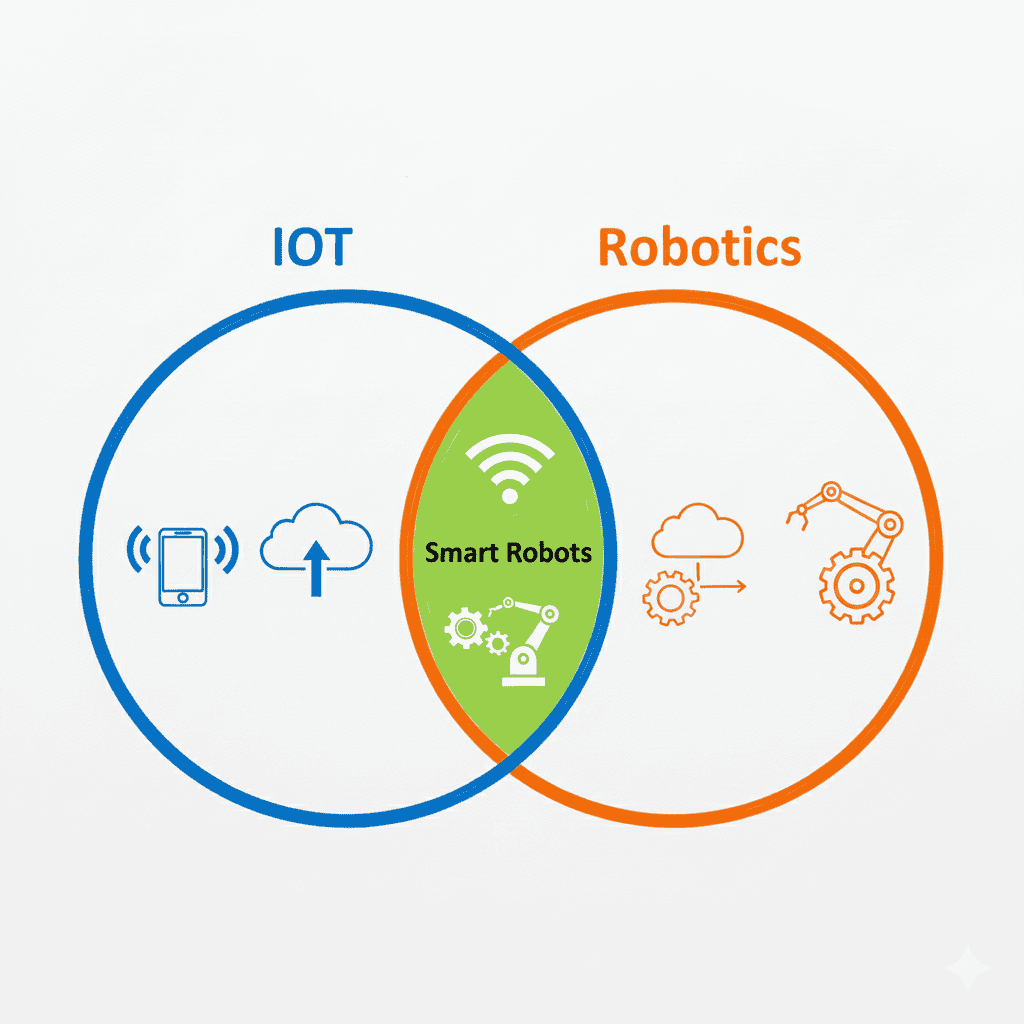
This convergence creates what experts call the Internet of Robotic Things (IoRT), where robots gain enhanced situational awareness through IoT sensors and data analytics.

Real Integration Examples

Smart Warehouse Robots: These combine robotics (moving items, lifting packages) with IoT (tracking inventory, coordinating with management systems, optimizing routes based on real-time data).

Connected Delivery Drones: The robotics portion handles flight and navigation. The IoT component manages GPS tracking, delivery confirmations, and fleet coordination through cloud systems.

Home Care Robots: Physical robotics enables medication delivery and mobility assistance. IoT connectivity allows family members to monitor activities and receive health alerts remotely.

Understanding IoT device management helps when coordinating multiple robotic systems.

Why This Combination Matters

Benefits of Merging IoT and Robotics:

  • Enhanced decision-making through cloud processing
  • Remote monitoring and troubleshooting
  • Coordinated multi-robot operations
  • Predictive maintenance and efficiency improvements
  • Data-driven performance optimization

This integration represents the future of automation. Building remote-controlled robots teaches these combined principles effectively.


Real-World Examples Kids Can Understand

Letโ€™s explore practical examples that highlight the difference between IoT and Robotics in everyday situations.

Pure IoT Examples

Smart Home Thermostat:

  • What it does: Monitors temperature and adjusts heating/cooling
  • Why itโ€™s IoT: No moving parts, focuses on data and connectivity
  • How it works: Sensors detect temperature, cloud analyzes patterns, remote app provides control

Fitness Tracker:

  • What it does: Counts steps, monitors heart rate, tracks sleep
  • Why itโ€™s IoT: Wearable sensors collecting and transmitting data
  • How it works: Accelerometer detects movement, syncs data to phone, displays trends

Smart Doorbell:

  • What it does: Alerts you when someone presses the button, shows video
  • Why itโ€™s IoT: Camera and sensor system with internet connectivity
  • How it works: Motion detection triggers recording, sends notification to phone

Check out IoT-based projects for beginners to build similar systems.

Pure Robotics Examples

Robot Vacuum Cleaner:

  • What it does: Navigates rooms and cleans floors automatically
  • Why itโ€™s robotics: Physical movement, obstacle avoidance, task completion
  • How it works: Motors drive wheels, sensors detect obstacles, suction system cleans

Robotic Arm in Manufacturing:

  • What it does: Assembles products, welds parts, packages items
  • Why itโ€™s robotics: Precise mechanical movements and physical manipulation
  • How it works: Multiple joints coordinate, end effector grabs objects, follows programmed sequences

Educational Robot Kit:

  • What it does: Follows lines, avoids obstacles, responds to commands
  • Why itโ€™s robotics: Teaches mechanical design and autonomous navigation
  • How it works: Motor control, sensor feedback, programmed decision-making

Explore robotics science fair projects to see these concepts in action.

Hybrid IoT-Robotics Examples

Autonomous Delivery Robot:

  • Robotics component: Wheels for movement, compartments for packages
  • IoT component: GPS tracking, route optimization, customer notifications
  • Why both: Physical delivery requires movement; coordination needs connectivity

Smart Agricultural Robot:

  • Robotics component: Moves through fields, plants seeds, applies treatments
  • IoT component: Soil sensors, weather data integration, crop monitoring dashboards
  • Why both: Field work needs physical capability; optimization requires data
Real-world applications showing pure IoT device, pure robotics system, and hybrid technology demonstrating practical differences

Which Should You Learn First?

The difference between IoT and Robotics affects which path you choose to start your learning journey. Hereโ€™s how to decide.

Start with IoT If You:

Prefer software over hardware

  • IoT projects involve more programming than mechanical building
  • Focus on logic, data structures, and network communication
  • Less time spent on physical assembly

Want faster results

  • Simple IoT projects work within hours
  • Immediate feedback from sensors and apps
  • Less troubleshooting of mechanical issues

Are interested in smart home technology

  • Control devices remotely through apps
  • Automate daily routines and tasks
  • Connect various household systems

Have limited tools and space

  • IoT needs basic electronics tools only
  • Projects fit on a desk or breadboard
  • No workshop or special equipment required

Learn Python programming firstโ€”itโ€™s perfect for IoT development.

Start with Robotics If You:

Enjoy hands-on building

  • Robotics combines mechanics with electronics
  • Satisfaction of creating moving machines
  • Tangible results you can watch operate

Like solving physical challenges

  • Design structures that balance and move
  • Overcome mechanical limitations creatively
  • Build devices that interact with real environments

Want to see immediate action

  • Robots provide visual feedback through movement
  • Motors, lights, and sounds create excitement
  • Physical accomplishment feels rewarding

Plan engineering or design careers

  • Robotics teaches fundamental engineering principles
  • Experience with CAD design and manufacturing
  • Portfolio pieces for college applications

Start with simple projects like Scratch robotics to learn visual programming basics.

The Best Path: Learn Both!

Why Learning Both Matters: The most innovative projects combine IoT connectivity with robotic action. Understanding both technologies prepares you for future careers where these fields merge constantly.

Recommended Learning Sequence:

  1. Months 1-2: Basic electronics and sensors (applies to both)
  2. Months 3-4: Simple IoT projects (smart lights, temperature monitors)
  3. Months 5-6: Beginner robotics (line followers, obstacle avoiders)
  4. Months 7-8: Integrate both (connected robots, smart automation)

This progression builds skills systematically while maintaining excitement through variety.


Common Mistakes When Understanding the Difference

Mistake 1: Thinking IoT Devices Donโ€™t Move

  • Why itโ€™s problematic: Some IoT devices have mechanical parts (smart locks, automated blinds), but their primary function is connectivity, not physical work.
  • Correct approach: Focus on the main purposeโ€”if itโ€™s primarily about data collection and remote control, itโ€™s IoT even with small movements.

Mistake 2: Assuming All Robots Need Internet

  • Why itโ€™s problematic: Many robots operate completely offline, making autonomous decisions without connectivity. Internet access doesnโ€™t define robotics.
  • Correct approach: Robotics centers on physical action and task completion. Connectivity is optional and depends on application requirements.

Mistake 3: Believing IoT is Always Cheaper

  • Why itโ€™s problematic: Industrial IoT sensors and enterprise systems cost thousands, while educational robot kits stay affordable.
  • Correct approach: Compare similar complexity levels. Entry costs vary by application, not by whether itโ€™s IoT or robotics.

Mistake 4: Confusing AI with IoT or Robotics

  • Why itโ€™s problematic: AI (Artificial Intelligence) is software that makes decisions. It can exist in IoT systems, robots, or standalone applications.
  • Correct approach: AI is the โ€œbrain,โ€ IoT handles connectivity, and robotics manages movement. Theyโ€™re complementary but distinct. Learn about AI for kids to understand this relationship.

Mistake 5: Thinking You Must Choose One Over the Other

  • Why itโ€™s problematic: Modern technology increasingly combines both. Limiting yourself restricts learning opportunities and project possibilities.
  • Correct approach: View IoT and robotics as complementary skill sets. Learning both opens more career paths and creative options.

Mistake 6: Overlooking Safety Differences
  • Why itโ€™s problematic: Robotics involves moving parts that can cause physical harm if mishandled. IoT primarily poses cybersecurity risks rather than physical danger.
  • Correct approach: Apply appropriate safety measuresโ€”mechanical safety for robots, network security for IoT devices. Learn about keeping kids safe online.
Venn diagram illustrating overlap between IoT and Robotics showing how technologies combine in smart robotic systems

Success Story: Student Builds Both IoT and Robotics Project

Student: Sofia Martinez, 14 years old, Portland, Oregon

Initial Challenge: Sofia struggled to understand the difference between IoT and Robotics when starting her STEM education journey. โ€œI kept building projects but couldnโ€™t explain what made them different,โ€ she admitted. โ€œMy teachers asked if my smart plant monitor was robotics, and I didnโ€™t know how to answer.โ€

Solution Implemented: Working with ItsMyBot mentors over 10 weeks, Sofia built two distinct projects that demonstrated both technologies:

Action 1: Built Smart Home Energy Monitor (Pure IoT)

  • Installed current sensors on household circuits
  • Programmed ESP32 to collect and transmit power usage data
  • Created mobile dashboard showing real-time consumption
  • Learned IoT principles: sensing, connectivity, data visualization

Action 2: Created Autonomous Sorting Robot (Pure Robotics)

  • Designed robot chassis with gripper mechanism
  • Programmed color sensor to identify objects
  • Built sorting algorithm for autonomous operation
  • Learned robotics principles: mechanics, sensors, autonomous control

Action 3: Combined Technologies into Smart Recycling System

  • Robotic component: Conveyor belt moves items, robotic arm sorts materials
  • IoT component: Weight sensors track recycling amounts, cloud dashboard shows environmental impact, family members receive weekly reports
  • Integration lesson: Understanding when each technology adds value

Action 4: Created Educational Presentation

  • Demonstrated both projects side-by-side at science fair
  • Explained difference between IoT and Robotics clearly
  • Showed how combining technologies solves complex problems

Action 5: Mentored Younger Students

  • Started schoolโ€™s IoT and Robotics club
  • Taught 20+ students the fundamental differences
  • Helped peers choose appropriate technologies for their projects

Results Achieved:

  • Won 1st place at state science fair for technical innovation
  • Household reduced energy waste by 18% through monitoring awareness
  • Recycling sorting accuracy reached 94% with automated system
  • Gained clarity on technology distinctions and career interests
  • Secured acceptance to competitive summer robotics camp
  • Built portfolio demonstrating expertise in both domains

โ€œUnderstanding the difference between IoT and Robotics transformed my projects from random electronics to purposeful solutions,โ€ Sofia explained. โ€œNow I know exactly which technology solves specific problems, or when combining both creates something even better.โ€

Her integrated recycling system perfectly demonstrated thisโ€”robotics handled physical sorting while IoT provided family engagement and long-term tracking. The project earned recognition because it showed mastery of both technologies individually and together.
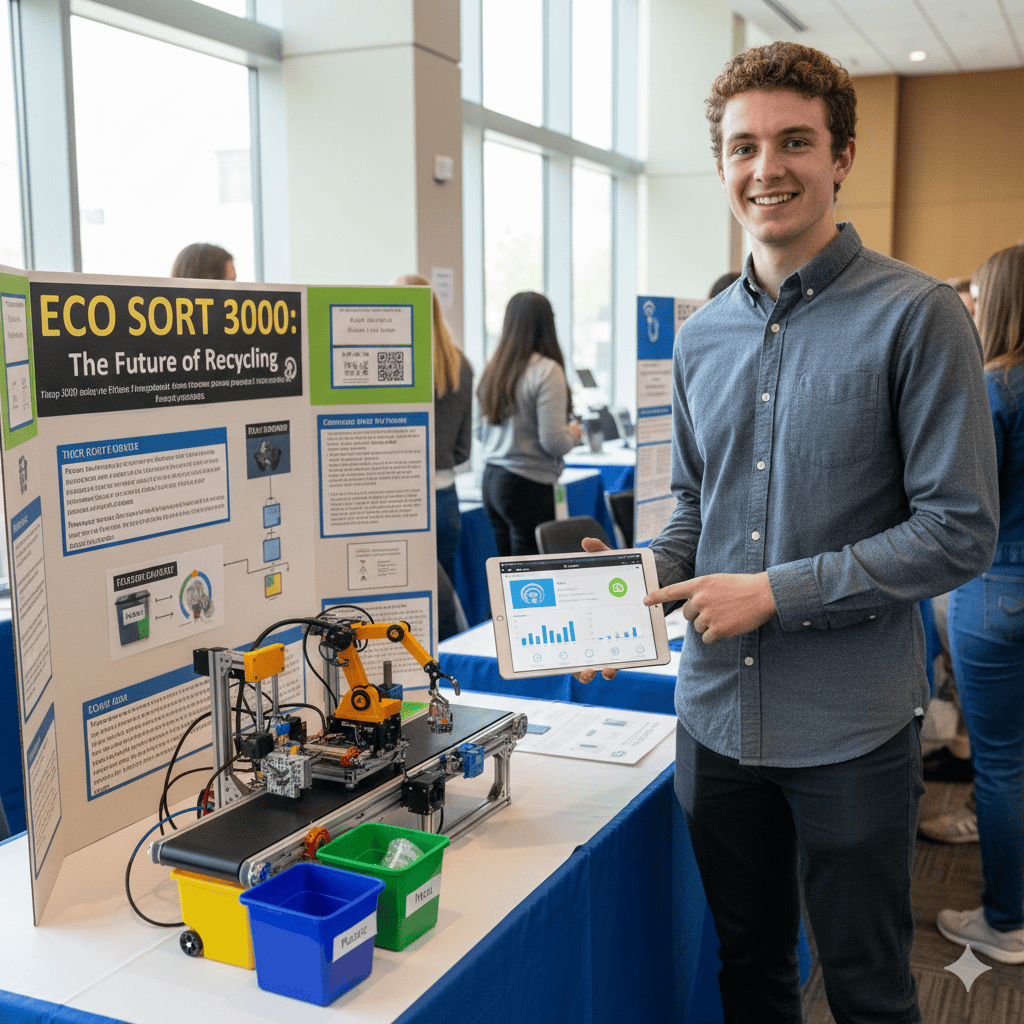
Student demonstrating combined IoT and robotics smart recycling project showing practical application of both technologies together

Frequently Asked Questions

What is the main difference between IoT and Robotics?

The main difference between IoT and Robotics is purpose: IoT focuses on connecting devices to collect data and enable remote control through internet connectivity, while robotics creates machines with mechanical parts that perform physical tasks through movement and manipulation. IoT is about information exchange; robotics is about physical action.

Can a robot have IoT capabilities?

Yes, robots can definitely have IoT capabilities. These are called โ€œsmart robotsโ€ or โ€œconnected robots.โ€ They combine robotic movement and task execution with IoT connectivity for remote monitoring, cloud processing, and multi-device coordination. Many modern robots integrate both technologies to maximize functionality.

Is robotics harder to learn than IoT?

Neither is inherently harderโ€”they require different skills. Robotics involves mechanical design, motor control, and physical troubleshooting. IoT focuses on network protocols, data handling, and cloud integration. Students who enjoy hands-on building often find robotics more intuitive, while those who prefer software may connect with IoT more easily.

Do I need programming for both IoT and Robotics?

Yes, both require programming, but different types. IoT programming focuses on data collection, network communication, and cloud integration. Robotics programming emphasizes movement control, sensor response, and autonomous decision-making. Both can start with visual block-based coding before advancing to text-based languages.

Which has more career opportunities: IoT or Robotics?

Both offer excellent career opportunities in growing fields. IoT careers include smart home development, industrial monitoring, and healthcare devices. Robotics careers span manufacturing automation, medical devices, and autonomous vehicles. Learning both technologies maximizes career options since many roles require understanding of both domains.

Whatโ€™s a simple first project to understand the difference?

Build a temperature monitor (IoT) and a line-following robot (Robotics) side by side. The temperature monitor collects data and sends it to your phoneโ€”pure IoT. The line follower uses sensors to guide physical movementโ€”pure robotics. This hands-on comparison clarifies the fundamental differences effectively.

Are drones IoT or Robotics?

Drones are hybrid devices combining both technologies. The robotics component includes motors, propellers, and flight control systems that enable physical movement. The IoT component provides GPS tracking, video transmission, and remote control through internet connectivity. This makes drones excellent examples of technology integration.

How much does it cost to learn both IoT and Robotics?

Complete learning kits cost $60-150 and cover both technologies. Individual IoT starter kits run $30-50, while basic robotics kits cost $40-80. Many schools and libraries provide free access through maker spaces. Online tutorials and open-source software keep learning costs minimal beyond initial hardware investment.

Conclusion

Understanding the difference between IoT and Robotics empowers you to choose the right technology for solving specific problems. IoT connects devices for intelligent data exchange, while robotics creates machines that perform physical workโ€”both transforming how we live and work.

Key Takeaways:

  • IoT focuses on connectivity and data โ€” remote control, monitoring, cloud integration
  • Robotics centers on physical action โ€” movement, manipulation, autonomous operation
  • Both technologies often combine โ€” creating smart machines with connectivity and capability
  • Learning both opens more opportunities โ€” modern solutions increasingly integrate both domains

The technologies arenโ€™t competitorsโ€”theyโ€™re collaborators. Your smart home uses IoT to monitor and control, while your robot vacuum uses robotics to clean floors. When combined, they create warehouse robots that coordinate through IoT networks while performing physical tasks through robotics.

Your journey into technology doesnโ€™t require choosing between IoT and Robotics. Start with whichever excites you more, then expand your skills to include both. This combination prepares you for careers in automation, smart manufacturing, connected healthcare, and autonomous systemsโ€”industries reshaping our future.

Ready to explore both IoT and Robotics through hands-on projects? Join ItsMyBotโ€™s personalized courses where kids aged 5-15 build real devices, gain confidence with every project, and discover that the best learning happens by creating.

Tags

Share

Preetha Prabhakaran

I am passionate about inspiring and empowering tutors to equip students with essential future-ready skills. As an Education and Training Lead, I drive initiatives to attract high-quality educators, cultivate effective training environments, and foster a supportive ecosystem for both tutors and students. I focus on developing engaging curricula and courses aligned with industry standards that incorporate STEAM principles, ensuring that educational experiences spark enthusiasm and curiosity through hands-on learning.

Related posts

Empowering children with the right skills today enables them to drive innovation tomorrow. Join us on this exciting journey, and let's unlock the boundless potential within every child.
ยฉ ItsMyBot 2025. All Rights Reserved.