
Age Group: 7–11 years
Programming Style: Block-based
Format: Interactive, hands-on, collaborative group learning

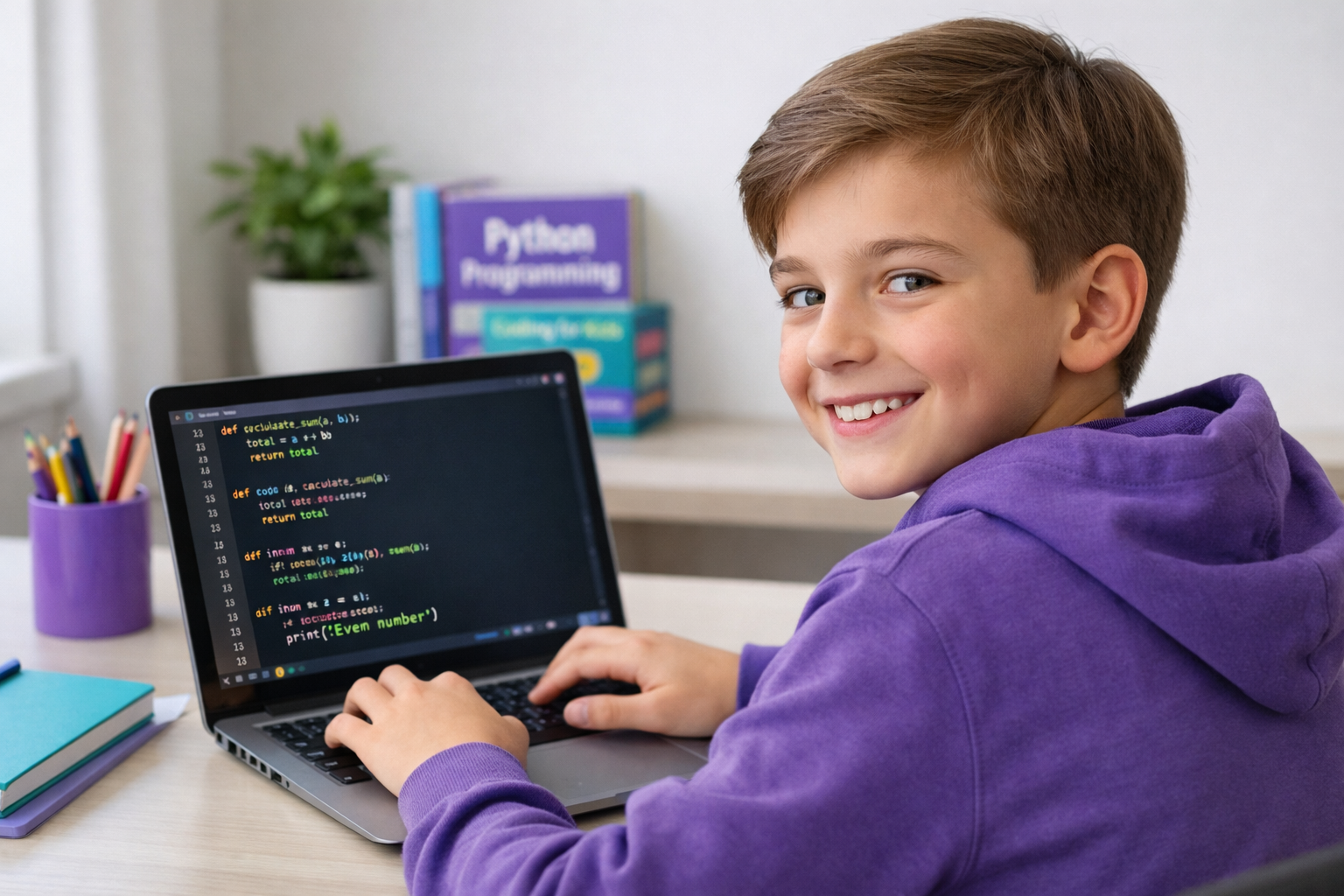
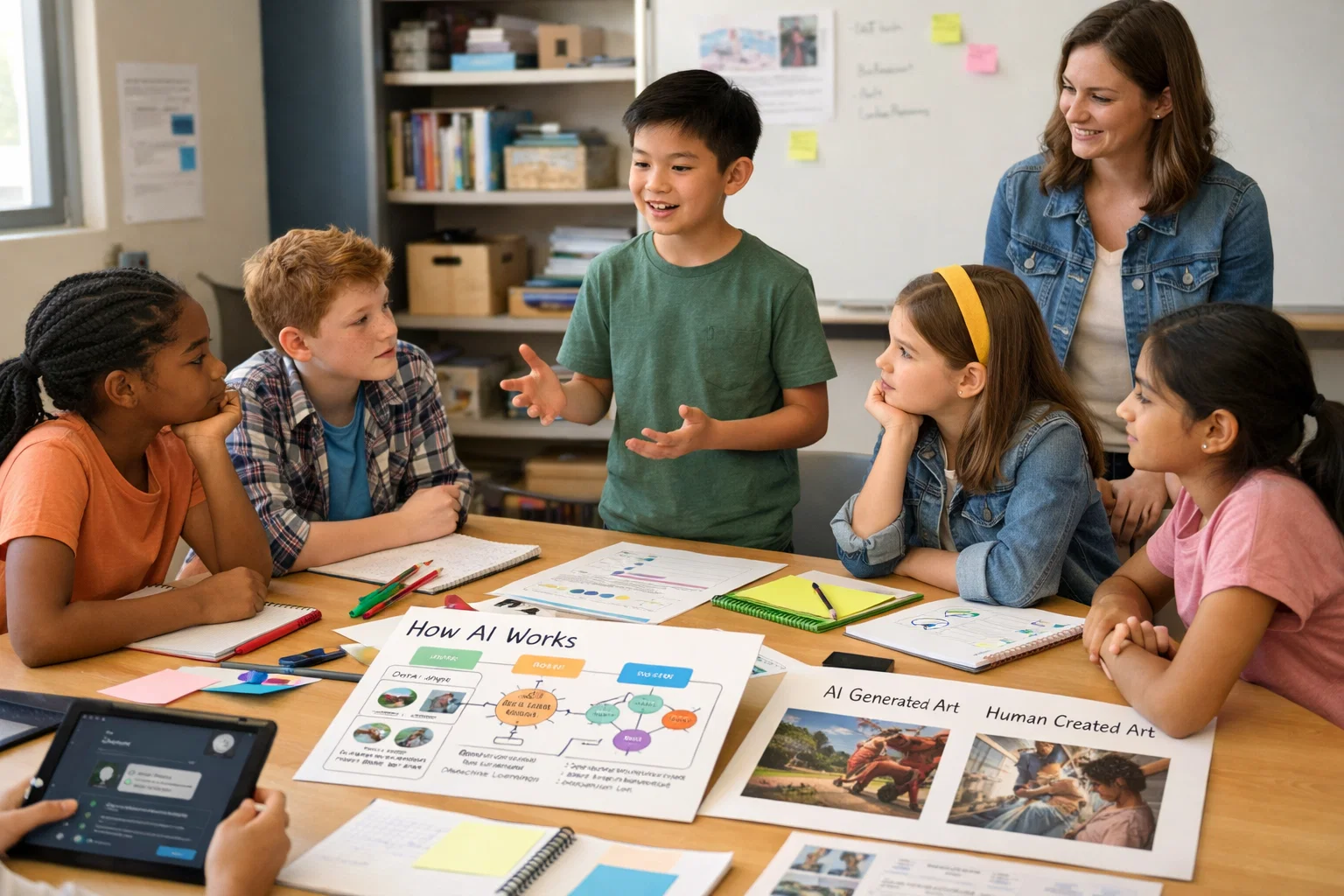
Kids learn what AI is, how it works in everyday life, and how to give clear instructions (prompts) to AI tools. They play interactive games and work on simple creative challenges as a team.
Children explore how AI can help them imagine characters, stories, voices, and visuals. They experiment with creating short story ideas, mini videos, or digital scenes using AI-powered tools.
Learners discover how shapes, colors, and layouts influence digital products. They sketch their first app idea and use beginner-friendly AI tools to generate icons and design elements.
Kids dive into color psychology, shapes, and emotions in design. They build a simple digital world or an app-style page using their creativity plus optional AI enhancements.
Children explore simple drag-and-drop AI tools, playful filters, and mini projects that introduce planning and automation concepts. They also learn the basics of ethical and responsible AI.
Blocks → JavaScript → Python
Learning Modules: 45-48 Hours
Assessment: 4-5 Hours
In this hands-on Minecraft coding pathway, students begin with fun block-based coding—agent builds, loops, teleportation, events, variables, and creative game design in the Grass level. They level up into Stone, where they combine advanced block logic with JavaScript text coding: coordinates, Redstone, nested loops, functions, debugging, and precision builds. In the Diamond level, they take on Python programming with lists, dictionaries, functions, OOP, randomness, and full mini-game development. Students build confidence through exciting projects at every stage.
Design → Lua Scripting → Game Publishing
Learning Modules: 50 Hours
Assessment: 5 Hours
In this exciting Roblox game-development journey, students learn how to build immersive 3D worlds and bring them to life with real Lua scripting. They begin with hands-on design—creating obstacles, terrain, effects, lighting, cities, maps, avatars, physics interactions, and full themed environments across 23 world-building classes. As they progress, they unlock the power of coding through well structured scripting lessons, learning variables, events, conditionals, functions, loops, UI interaction, animation, tools, game logic, NPC dialogue, and even saving data with DataStores.

Online coding, AI, and robotics classes that help kids ages 6–18 build real skills — and confidence — one project at a time.
No commitment · Live class with an expert teacher
© ItsMyBot 2026. All Rights Reserved.